muzycy:
Baikida Carroll: trumpet
Chris Speed: clarinet
Dominique Pifarély: violin
Erik Friedlander: cello
Jim Black: drums
Marc Ducret: 12 string guitar
Michael Formanek: bass
Tim Berne: alto saxophone, baritone saxophone
Editor's info:
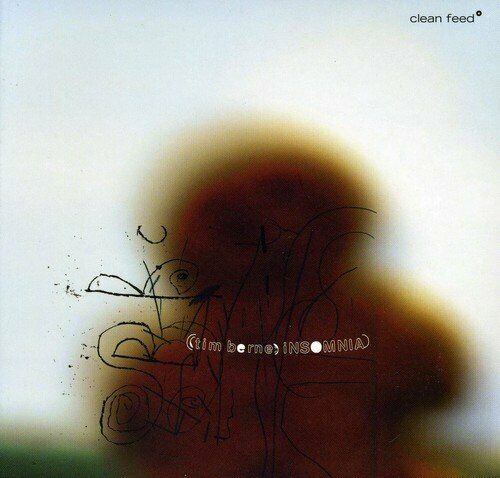
Insomnia might seem like a liability for someone who needs to be creative and sharp, but not always. Sleeplessness can give the eye another perspective - as if seeing through a kind of kaleidoscope: The things on the other end are the same, but they look different, other. Tim Berne didn't sleep the night before he and a choice international octet recorded INSOMNIA live in the studio, summer 1997. "I wouldn't suggest not sleeping before a session or a gig," Berne says, "but in this case, it did make everything look sharper. It was a different kind of focus." And this document is different, strikingly so. Released for the first time, INSOMNIA comprises two key Berne compositions - "the proposal" and "oPEN, cOMA," each a half-hour long or more - refracted through an expansive, even orchestral sensibility. Eight musicians can sound like 20 in these beautifully textured arrangements, with chamber-music intimacy the order, rather than any typical big-band jazziness. The core of the band is Berne's '90s quartet Bloodcount: Berne on alto and baritone saxophones, double-bassist Michael Formanek, drummer Jim Black and reed man Chris Speed on clarinet. The rest of the rich ensemble is made up of veteran trumpeter Baikida Carroll and a complement of strings: violinist Dominique Pifarély, cellist Erik Friedlander and guitarist Marc Ducret on 12-string acoustic. "It's just large enough to sound big, but it's not too big to keep from being intimate," Berne says. "The big band thing, per se, doesn't really interest me. I'm not into some people improvising and the rest just playing backgrounds. Here, all the improvising actually makes the written notes sound more alive but also more lucid." Composition and improvisation are threads woven together like a fantastic, multi-hued yarn on INSOMNIA. There are shades both bold and subtle; passages that are knife-edged, others that are limpid. There are extreme rhythmic intricacies, as well as disarming legato melodies ....... more
Editor's info:
Insomnia might seem like a liability for someone who needs to be creative and sharp, but not always. Sleeplessness can give the eye another perspective - as if seeing through a kind of kaleidoscope: The things on the other end are the same, but they look different, other. Tim Berne didn't sleep the night before he and a choice international octet recorded INSOMNIA live in the studio, summer 1997. "I wouldn't suggest not sleeping before a session or a gig," Berne says, "but in this case, it did make everything look sharper. It was a different kind of focus." And this document is different, strikingly so. Released for the first time, INSOMNIA comprises two key Berne compositions - "the proposal" and "oPEN, cOMA," each a half-hour long or more - refracted through an expansive, even orchestral sensibility. Eight musicians can sound like 20 in these beautifully textured arrangements, with chamber-music intimacy the order, rather than any typical big-band jazziness. The core of the band is Berne's '90s quartet Bloodcount: Berne on alto and baritone saxophones, double-bassist Michael Formanek, drummer Jim Black and reed man Chris Speed on clarinet. The rest of the rich ensemble is made up of veteran trumpeter Baikida Carroll and a complement of strings: violinist Dominique Pifarély, cellist Erik Friedlander and guitarist Marc Ducret on 12-string acoustic. "It's just large enough to sound big, but it's not too big to keep from being intimate," Berne says. "The big band thing, per se, doesn't really interest me. I'm not into some people improvising and the rest just playing backgrounds. Here, all the improvising actually makes the written notes sound more alive but also more lucid." Composition and improvisation are threads woven together like a fantastic, multi-hued yarn on INSOMNIA. There are shades both bold and subtle; passages that are knife-edged, others that are limpid. There are extreme rhythmic intricacies, as well as disarming legato melodies ....... more










 serpent.pl /
shop /
latest /
special offers /
new /
recommended /
labels /
artists /
bestsellers /
shipping costs /
help /
terms and conditions /
contact
serpent.pl /
shop /
latest /
special offers /
new /
recommended /
labels /
artists /
bestsellers /
shipping costs /
help /
terms and conditions /
contact