muzycy:
Johannes Felscher - Double bass
Ruben Steijn - Drums
Roman Rofalski - Piano
Editor's info:
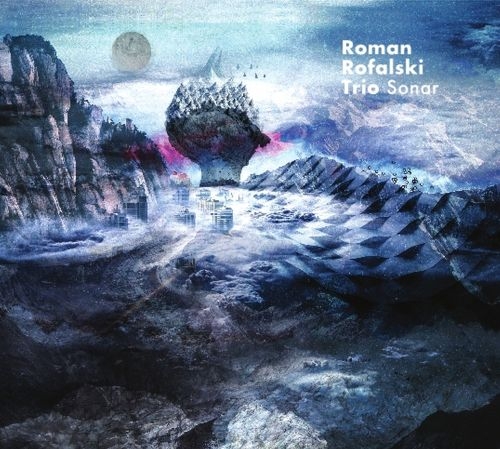
Roman Rofalski gives free reign to his musical language in his new album, integrating abstract rhythmic and harmonic ideas from contemporary classical music with jazz.
Solaris is based on the book by Stanislaw Lem and reflects the ocean of plasma that the writer describes in its different forms and colours.
Sonar the title track, complex in style is, “A song based on a constructed scale. This results in abstract melodies and harmonies, which, nevertheless form a rolling unity.”
Bosporus is a remodelled piece dedicated to the German/Turkish electric bass player Achim Seifert and his conflicts with the Turkish president Erdogan. “When the political tension with Turkey increased, I got the piece out again, and made it sharper and rhythmically more intricate.”
Proko Trance is inspired by a motif taken from a Prokofiev piano concerto. “I mostly take small motifs, harmonic or rhythmic cells from the original and use them as a basis to develop and transform them into my notion of a song structure.”
Garspacho is based on an idea from Ravel’s Gaspard de la nuit.“It comes from my past as a concert pianist, an incredible piece. Technically demanding. I’ve practised it so much in my life that I thought, I have to build grooves out of this piece. The ideas that Ravel had are still very fresh. His harmony has decisively influenced jazz pianists of recent decades. I've tried to bring it into a loop-like repetitive form.”
These pieces, as Roman explains, combine improvisation with careful structure: “A very large proportion of my music is composed. Nevertheless I play with Johannes and Ruben because I appreciate their personalities and what they have to offer – musically. That is why I try to create a composition that works in itself, but provides enough space for the guys, just as if we’re havi....... more
To już trzecia płyta tego tria. Pierwsza "Der Wegweiser" wydana została w 2014, druga "Studio Konzert" w 2015 roku. Obie ukazały się dla niemieckiej Neuklang Records. Jednak dopiero trzecia płyta przynosi wyjątkowy materiał. Na pierwszy "rzut ucha" to klasyczne granie, bez udziwnień i bez próby udowadniania, że da się szybciej, mocniej. Jednak gdzieś w połowie płyty, za sprawą porywających tematów fortepianowych, oddajemy się jego muzyce z zapamiętaniem. W dziewięć tematów napisanych przez Rofalskiego zaszyty jest trans, co nieuchronnie przywodzi na myśl najlepsze kompozycje Esbjorna Svenssona.
Rofalski podobnie jak miał w zwyczaju Svensson, przez cały czas pozostaje na pierwszym planie i gra fenomenalnie. Dlatego też nie czujemy żadnego dyskonfortu, taka koncepcja ma głębokie uzasadnienie. W mnogości współczesnych kompozycji wypracowanie osobnego stylu jest niezmiernie trudne, jednak niemieckiemu pianiście, może przez afiliacje z współczesną muzyką komponowaną spod znaku Karlheinza Stockhausena, to zadanie udało się w stu procentach. Kilka utworów kwalifikuje się do listy najlepszych w tym roku, takiej triowej pianistyki można słuchać wciąż i wciąż.










 serpent.pl /
shop /
latest /
special offers /
new /
recommended /
labels /
artists /
bestsellers /
shipping costs /
help /
terms and conditions /
contact
serpent.pl /
shop /
latest /
special offers /
new /
recommended /
labels /
artists /
bestsellers /
shipping costs /
help /
terms and conditions /
contact