muzycy:
Michaël Attias: alto saxophone
Aruán Ortiz: piano
John Hebert: bass
Nasheet Waits: drums
Editor's info:
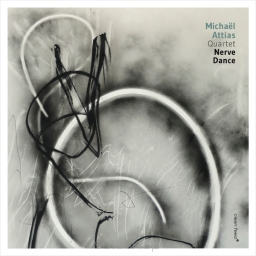
Nerve Dance – saxophonist/composer/bandleader/conceptualist Michae¨l Attias’ sixth album (available on Clean Feed Records, March 10, 2017), which deals with the aesthetics of spontaneity, the theory of elasticity and the concept of equality in music, is an expansive, spirited debut from Michae¨l Attias’ new Quartet, featuring Arua´n Ortiz (piano), John He´bert (bass) and Nasheet Waits (drums). OnNerve Dance, we are regaled with hearing four hearts, minds and bodies hooking up at an extremely high level on nine Attias compositions, and two from He´bert. Each piece exercises a different set of muscles and faculties for the band, and every member of the Quartet carries within them the historical knowledge and a fluency in the multitude of dialects of this music; consequently we hear them free within the compositions, deep into the zone of this collective creation, transcending their respective instruments and completely surrendering to the music.
Attias has been influenced by literature, film, painting, extensive travel, life in general, and of course, a wide spectrum of music, ranging from Moroccan Gnawa rhythms to Renaissance Polyphony, Ligeti, Debussy and the 2nd Viennese School; the AACM, Ornette Coleman, Cecil Taylor and Steve Lacy, but also Andrew Hill, Paul Motian, Konitz & Marsh, plus the first and lasting loves, Ellington, Coltrane, Monk, Miles and Bird. Attias’ music, while dedicated to “creation” rather than “re-creation”, remains firmly rooted in the avant-garde, conceptualized as the true tradition of this music from its earliest recordings onward. Attias asserts that the revolutionary, adventurous spirit of the major figures of jazz, including his aforementioned influences, made bold strokes of genius that only seem inevitable in retrospect, and have paved the way for the audacious improvisers of today who remain singular and fearless in the face of mass conformity. There....... more
Każdy chyba skład Michaëla Attiasa jaki słyszałem jest jakby pochodną Renku, tria, które - w moim odczuciu - zdaje się definiować muzykę tego nowojorskiego saksofonisty i improwizatora. Nie dość, że w każdym z tych projektów towarzyszy mu przyjaciel i kontrabasista John Hébert (wyrastający także i tutaj na współlidera projektu) to jeszcze mam wrażenie, że poruszamy się w kręgu tych samych zagadnień i estetyk - spontaniczności, uniwersalności i elastyczności formuły każdego z tych zespołów. No i pojęcia równości w muzyce rzecz jasna.
Bo chociaż muzyka to kompozycje Attiasa i Héberta, to o jasnym, czytelnym liderowaniu w tym składzie (jak i innych amerykańskiego saksofonisty) trudno mówić. Attias konsekwentnie powściąga bowiem swoją ekspansywność grając niezwykle oszczędnie. I chociaż każdy z instrumentów spełnia tu de facto przypisaną mu rolę (saksofon - instrument solowy, fortepian - harmonia, etc.), to przecież nie jest tak przez cały czas. Kontrabas i fortepian, rzadziej perkusja kierują tu poczynaniami zespołu i definiują budowaną przez wszystkich dramaturgię tak poszczególnych kompozycji, jak i całego nagrania. I chociaż saksofon nie pełni tu funkcji rytmicznych (jak przecież zdarza się choćby w licznych projektach Kena Vandermarka), to również nie nadużywa swej solistycznej roli i nie definiuje całości muzyki, jak i poczynań poszczególnych instrumentalistów.
Osią narracyjną zdaje się być dialog basu i saksofonu, chociaż gęstość poczynań Aruán Ortiza za klawiaturą fortepianu nieco spycha ją na plan dalszy. To właśnie pianista nasyca energią muzykę kwartetu. W to wszystko wchodzi niezwykle zgrabnie i czujnie perkusją Waitsa, który jak mało kto podkreślić potrafi rytmiczne aspekty kompozycji, nie wysuwając ich jednocześnie na plan pierwszy. To zresztą w moim odczuciu jeden z najbardziej niedocenionych i wszechstronnych bębniarzy na amerykańskiej scenie, potrafiących jak mało kto grać mainstream i free jazzową awangardę. I nasycić każd....... more










 serpent.pl /
shop /
latest /
special offers /
new /
recommended /
labels /
artists /
bestsellers /
shipping costs /
help /
terms and conditions /
contact
serpent.pl /
shop /
latest /
special offers /
new /
recommended /
labels /
artists /
bestsellers /
shipping costs /
help /
terms and conditions /
contact