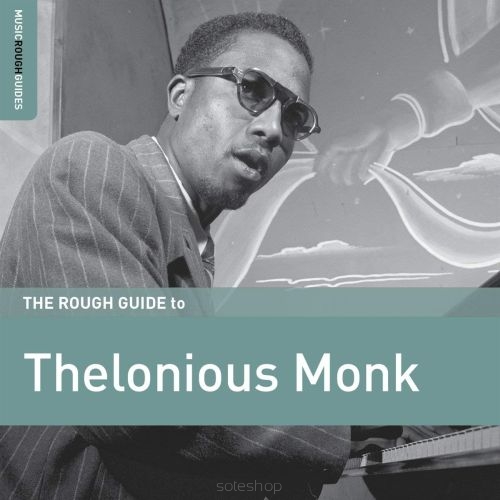
One of the most innovative and idiosyncratic figures in jazz history, Thelonious Monk pursued a singular artistic vision as pianist and composer. This collection brings together many of his finest recordings from the late 1940s and 1950s when he made numerous contributions to the standard jazz repertoire with a unique and unorthodox improvisational style.
Thelonious Monk was one of the most innovative and idiosyncratic figures in jazz history. Almost from the outset the pianist pursued a singular artistic vision as player and composer and played a key part in the birth of the music which emerged from New York City in the mid-1940s, which, with its new harmonic and rhythmic ideas, ultimately became known as bebop.
Born in Rocky Mount, North Carolina, on 10 October 1917, Thelonious Sphere Monk Jr. moved to Manhattan when he was four and lived there for the rest of his life. As a teenager, he played at rent parties, performed with a travelling evangelist, and later associated with the Harlem stride pianists - all of which helped inform his percussive playing style to a greater or lesser extent.
The earliest documentation of Monk's playing is in New York in 1941 at after- hours venues such as Minton's Playhouse where, with others, he helped to form the framework for bebop. His own recording career started unusually late for such a major figure in the music, with the first sessions taking place just days after his thirtieth birthday. However, this seemingly long gestation period produced a unique body of work and afforded Monk a well-defined repertoire of music for the rest of his professional life. Structurally these compositions rarely deviated from those common to the era but were recast with angular melodies, dissonant harmonies and oblique rhythmic patterns.
The first six pieces in this selection are from Monk's sessions for the Blue Note label (1947 -1951) and include his earliest recordings as lea....... more
One of the most innovative and idiosyncratic figures in jazz history, Thelonious Monk pursued a singular artistic vision as pianist and composer. This collection brings together many of his finest recordings from the late 1940s and 1950s when he made numerous contributions to the standard jazz repertoire with a unique and unorthodox improvisational style.
Thelonious Monk was one of the most innovative and idiosyncratic figures in jazz history. Almost from the outset the pianist pursued a singular artistic vision as player and composer and played a key part in the birth of the music which emerged from New York City in the mid-1940s, which, with its new harmonic and rhythmic ideas, ultimately became known as bebop.
Born in Rocky Mount, North Carolina, on 10 October 1917, Thelonious Sphere Monk Jr. moved to Manhattan when he was four and lived there for the rest of his life. As a teenager, he played at rent parties, performed with a travelling evangelist, and later associated with the Harlem stride pianists - all of which helped inform his percussive playing style to a greater or lesser extent.
The earliest documentation of Monk's playing is in New York in 1941 at after- hours venues such as Minton's Playhouse where, with others, he helped to form the framework for bebop. His own recording career started unusually late for such a major figure in the music, with the first sessions taking place just days after his thirtieth birthday. However, this seemingly long gestation period produced a unique body of work and afforded Monk a well-defined repertoire of music for the rest of his professional life. Structurally these compositions rarely deviated from those common to the era but were recast with angular melodies, dissonant harmonies and oblique rhythmic patterns.
The first six pieces in this selection are from Monk's sessions for the Blue Note label (1947 -1951) and include his earliest recordings as lea....... more










 serpent.pl /
shop /
latest /
special offers /
new /
recommended /
labels /
artists /
bestsellers /
shipping costs /
help /
terms and conditions /
contact
serpent.pl /
shop /
latest /
special offers /
new /
recommended /
labels /
artists /
bestsellers /
shipping costs /
help /
terms and conditions /
contact