muzycy:
Eric Platz: drums, percussion, mbira
James Falzone: clarinet, shruti box
Leanne Zacharias: 'cello
Don Benedictson: electric bass
LINER NOTES by Timothy Schuler
Like maps, all music has a scale. Not just a set of pitches but a spatial corollary. The amount of time one gives a note, or puts between two of them, correlates directly with the scope of the landscape imagined by the listener. A drone becomes a vista, the edges of the sound like the measureless horizon. More frenetic arrangements evoke something closer to the pace at which we experience our lives, a musical expression of our inability to hold on to any one moment before it is subsumed by the next, gone as quickly as an unsustained note.
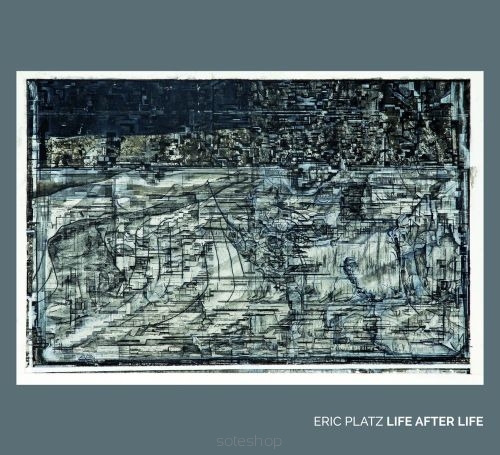
On his adventurous and cinematic debut, Life After Life, drummer and composer Eric Platz moves seamlessly between these imagined scales, juxtaposing them against one another like some cartographic impossibility. This movement becomes a sort of narrative device, the start of a chapter, or its end, and the tension and drama in the shifting perspective begins to tell a story of its own.
Platz composed the music on Life After Life for its three principal players: Chicago-based clarinetist James Falzone (KLANG, Allos Musica, The Renga Ensemble); cellist Leanne Zacharias (Music for Spaces, Correction Line Ensemble); and himself. A veteran improviser, Platz is a drummer and percussionist of incredible nuance, a skill he honed over several decades as a sideman, touring with acts in and outside the jazz world. If the music on Life After Life is a descendant of the Third Stream and contemporary improvisation, it is also a natural culmination of Platz’s prismatic interests, refracted through his affinities for jazz, classical, folk, and world musics.
He began playing drums at age 10, shortly after his family moved to Wilmington, Delaware. Despite his age, he began studying with a percussionist from the Philadelphia Orchestra, who turned him on to Tony Williams. He fell in love with Miles Davis’s The Complete Concert 1964: My Funny Valentine + Four a....... more
Na początek krótka kameralna forma "Life After Life One". Dwie i pół minuty drapieżnego klarnetu i stawiającej na wyraziste akcenty perkusję. Krótko i soczyście.
Drugi "Seeds of Doubt" to zbudowana na dźwiękowych "półcieniach" pastelowa pieśń drogi, prowadzona dwugłosowo przez klarnet Jamesa Falzone i wiolonczelę Leanne Zacharias. Widmowa perkusja lidera podkręca marzycielski charakter kompozycji. Gitara basowa miękko stawia rytmiczne znaczniki.
Trzeci w stawce "Redwood Vesper" rozpoczyna się oniryczną, kontrolowaną psychodelią. Dalej ruchliwy klarnet przekomarza się z czujną perkusją, kończąc apetyczną, noisową pętlą.
Następnie kameralna interluda, druga część "Life After Life", szereg krótkich, duetowych strzępków, klarnet Falzone i perkusjonalia Platza.
Dalej najdłuższy "Blood Meridian". Ponad 20 minut dźwiękowego amalgamatu. Rozpoczyna się atmosferycznym minimalem, kłania się La Monte Young. Po kilku minutach pojawia się wyraźny rytm, budowany przez gitarę basową i perkusję, by za moment zgasnąć tak samo nagle, jak się pojawił. Wkraczamy w świat pełnokrwistej akustycznej improwizacji, wszystko pod pełną kontrolą, muzycy nie zdążą się rozpędzić, a już czeka na nich zmiana, kolejny scenariuszowy zakręt stawia nas do pionu. "Blood Meridian" to wiele odrębnych, zazębiających się, przenikających się kompozycji w jednym utworze. Dopiero po kolejnym odsłuchu jesteśmy w stanie połapać się w tym stylistycznym patchworku. Strzępy kameralistyki (klarnet i wiolonczela), pobudzający basowo-perkusyjny beat, ekwilibrystyczne interakcje wybornych instrumentalistów, minimalistyczne wzory dające bardzo ciekawą perspektywę. Platz z zespołem odlatuje, to subtelne odejście od normy zachwyca i nie daje wytchnąć.
Zbliżamy się do końca, jeszcze trzecia część "Life After Life", do klarnetu Falzone dołącza wiolonczela Leanne Zacharias. Smakowita mała forma.
Na koniec jedenastominutowa "Marrakesh High Line", siostrzana do "Seeds of Doubt". Królews....... more










 serpent.pl /
shop /
latest /
special offers /
new /
recommended /
labels /
artists /
bestsellers /
shipping costs /
help /
terms and conditions /
contact
serpent.pl /
shop /
latest /
special offers /
new /
recommended /
labels /
artists /
bestsellers /
shipping costs /
help /
terms and conditions /
contact