Guillermo Gregorio - Bb clarinet, A clarinet, alto clarinet, and alto saxophone, conduction (Moholy 2)
Damon Smith - double bass
Jerome Bryerton - percussion, selected cymbals, misc. drums
Recorded by Todd Carter, Experimental Sound Studio, Chicago 2007 & 2008
Mixed & mastered by Ryan Edwards
Music by Guillermo Gregorio
except "Cards" by Roscoe Mitchell ART ENSEMBLE OF CHICAGO
Oszałamiający występ trio Guillermo Gregorio, z wirtuozem basu Damonem Smithem i mistrzem perkusji Jerome Bryertonem, jest zainspirowany niezwykłą sztuką i pomysłami László Moholy-Nagyego, twórcy multidyscyplinarnego, założyciela New Bauhaus w Chicago.
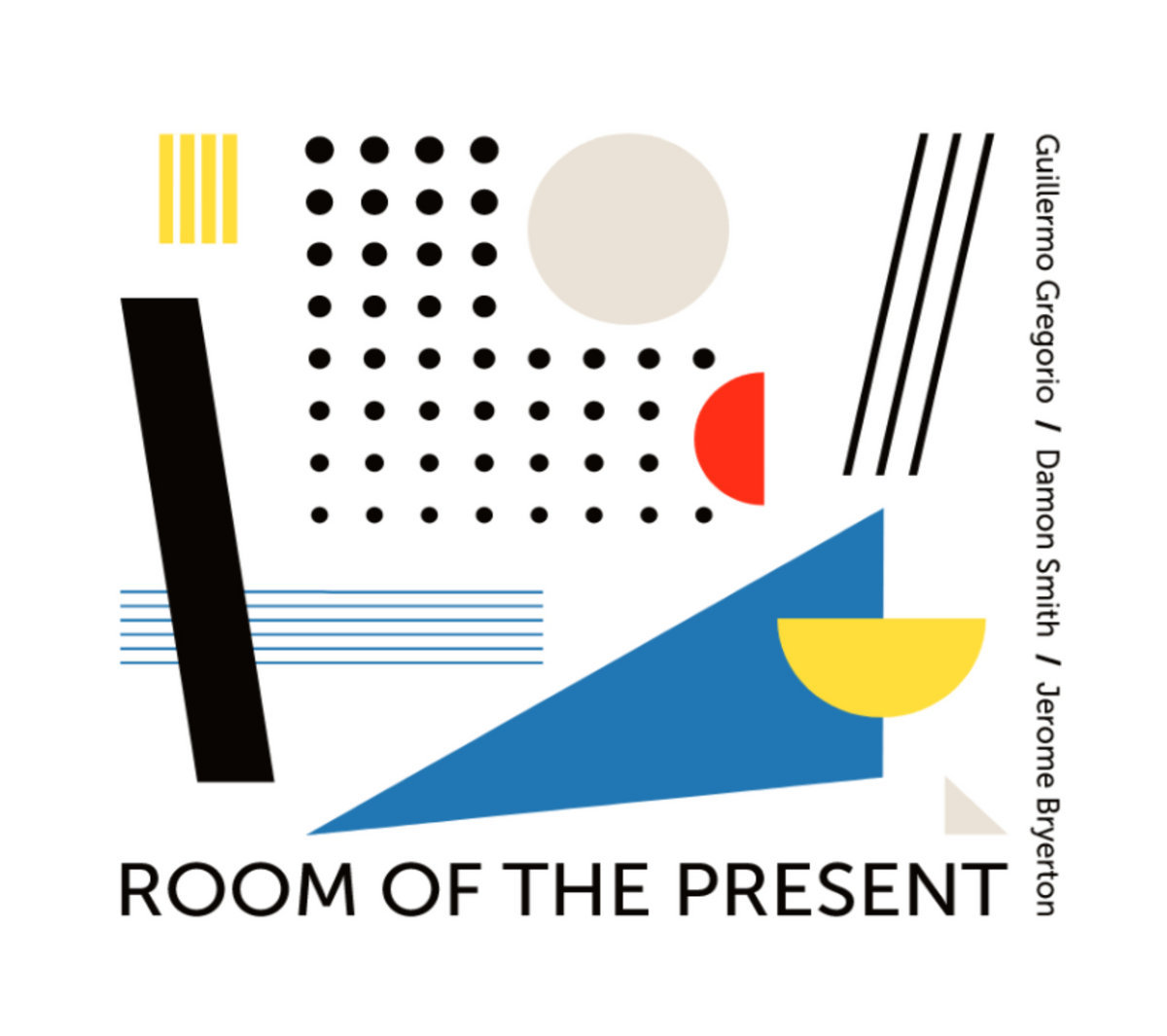
This album is structured around two performances of Guillermo Gregorio’s graphic score Moholy 2, inspired by the remarkable art and ideas of László Moholy-Nagy (1895–1946). More about him later. Gregorio’s fascinating score, illustrated here, deserves center stage.
In the complete score, at top, shapes float in a blank void. Bars of notated music and sections of musical staff are the only reminders of a conventional score. Look at them again and imagine that you can’t read music. Black dots scatter, one by one, across five parallel, horizontal lines. Gregorio isolates the dot and the line and reimagines them as the vocabulary for a new visual language that only exists in this universe. Dots grow into circles and shrink into specks. They rotate to form ellipses and cut off into hemispheres and circle segments. Lines wander and multiply, streak across the void at dynamic angles and assemble with martial order to create geometric shapes. One renegade line in the upper right arranges itself into a nest of intertwined triangles. Like all good graphic scores, Moholy 2 offers the performer countless variations of simple units to interpret.
But this complete score with all its richness is only part of a two-layered system. A second sheet, which Gregorio calls a “mask,” sits on top of the complete score, blocking it except for twelve open circles that focus the performer’s attention on specific passages. Moving the mask invites the potential for endless permutations. For these performances, black-and-white versions of the score were used, but the color versions illustrated here introduce a new layer of complexity.










 serpent.pl /
shop /
latest /
special offers /
new /
recommended /
labels /
artists /
bestsellers /
shipping costs /
help /
terms and conditions /
contact
serpent.pl /
shop /
latest /
special offers /
new /
recommended /
labels /
artists /
bestsellers /
shipping costs /
help /
terms and conditions /
contact