muzycy:
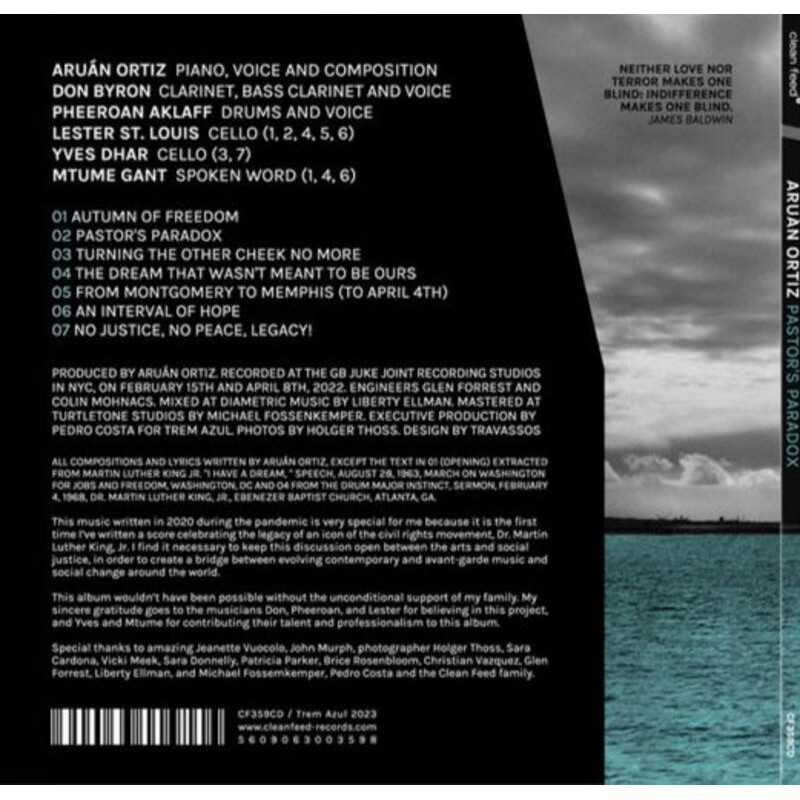
Aruán Ortiz piano, voice and composition
Don Byron Bb clarinet, Eb clarinet, Bass clarinet and voice
Pheeroan akLaff drums and voice
Lester St. Louis cello (1, 2, 4, 5, 6)
Yves Dhar cello (3, 7)
Mtume Gant spoken word (track 1 ,4, 6)
Editor's Info:
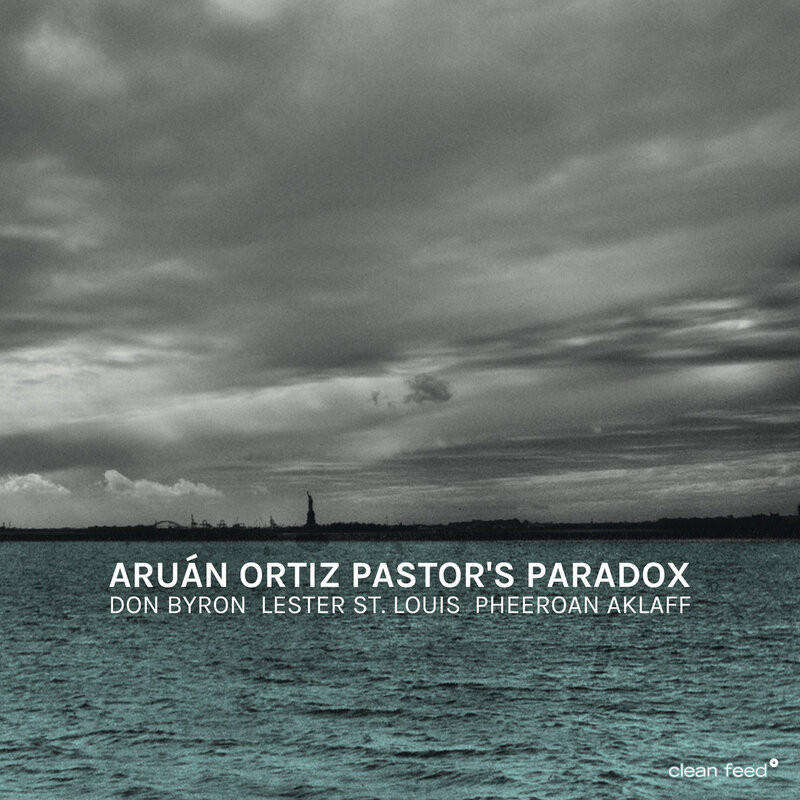
60 years ago, Dr. Martin Luther King Jr. delivered his signature “I Have a Dream” speech at the Lincoln Memorial. The content, structure and power of King’s words serve as a fundamental inspiration for Pastor’s Paradox, the stirring new album by Cuban-born, Brooklyn-based pianist, composer and conceptualist Aruán Ortiz. Due October 20, 2023 on Clean Feed Records, the album features a stellar lineup of players including clarinetist Don Byron, cellists Lester St. Louis and Yves Dhar,drummer Pheeroan akLaff, and spoken word artist Mtume Gant.
Pastor’s Paradox shares many of King’s themes, including racial equality, but also reflects Ortiz’s singular artistry. To write his enthralling suite, Ortiz studied King’s Biblical and world history references, the speech’s construction, and the pacing and vocal dynamics that give King’s words such power and momentum. “’I Have a Dream’ is one of the masterpieces in the history of speeches,” says Ortiz. “I studied that speech from different angles, particularly his use of analogies and how he integrated different aspects of literature into his message. It’s amazing when you analyze its structure.” In addition to studying the structure, analogies and literary references of the “I Have a Dream” speech, Ortiz delved into King’s 1968 speech “The Drum Major Instinct,” delivered five years after the March on Washington and two months before King’s assassination, as his pursuit of racial socio-economic justice became more radical and he spoke out against the Vietnam War.
The new album comes as Ortiz celebrates his 50th birthday year, and just seven months after the release of his acclaimed Serranías: Sketchbook for Piano Trio on Intakt Records. With bassist Brad Jones and drummer John Betsch, Ortiz mined influences from his native Cuba including toques, rumba and Afro....... more
60 lat temu, 28 sierpnia 1963 roku, podczas Marszu na Waszyngton pastor Martin Luther King wygłosił do 200-tysięcznego tłumu przemówienie. To wtedy padły pamiętne słowa, które usłyszał cały świat - "I Have a Dream" ("Mam marzenie"). Wielkie marzenie amerykańskiego pastora o równości i wolności dla czarnoskórych obywateli Stanów Zjednoczonych się spełniło. W 1965 roku Kongres amerykański przyjął ustawę o prawach obywatelskich, całkowicie znoszącą segregację rasową.
Treść, struktura i siła słów Kinga są inspiracją dla projektu "Pastor’s Paradox", za który odpowiedzialny jest urodzony na Kubie, mieszkający na Brooklynie pianisty i kompozytora Aruána Ortiza. Ponadto na płycie usłyszymy klarnecistę Dona Byrona, wiolonczelistów Lestera St. Louisa i Yvesa Dhara, perkusistę Pheeroana akLaffa i Mtume Ganta - spokenwordowca.
Aby napisać fascynującą suitę "Pastor's Paradox", Ortiz gruntownie przestudiował bodaj najsłynniejszą orację XX wieku. Zarówno jej treść, odniesienia do Biblii i historii świata, konstrukcję przemówienia oraz tempo i dynamikę oratorską, które nadały słowom Kinga taką moc i rozmach.
"I Have a Dream" to jedno z arcydzieł w historii publicznych wystąpień" – mówi Ortiz. "Przyjrzałem się temu przemówieniu bardzo uważnie, szczególnie pod kątem stosowania przez niego nośnych analogii i tego, jak wprowadzał różne literackie nawiązania w swoim przesłaniu. To niesamowite, gdy przeanalizujesz jego strukturę. Oprócz przestudiowania struktury, analogii i odniesień literackich przemówienia "I Have a Dream", Ortiz zagłębił się także w przemówienie Kinga z 1968 r. "The Drum Major Instinct", które wygłosił pięć lat po Marszu na Waszyngton i dwa miesiące przed zabójstwem Kinga.
Dan McClenaghan na All About Jazz w recenzji poprzedniej płyty Aruana Ortiza pisze o nim "pianista jak Picasso maluje gamą kolorów, od ciemnego błękitu po jasnoszary, kreując turbulencje i złowrogą atmosferę…" Teraz kubański piani....... more












 serpent.pl /
shop /
latest /
special offers /
new /
recommended /
labels /
artists /
bestsellers /
shipping costs /
help /
terms and conditions /
contact
serpent.pl /
shop /
latest /
special offers /
new /
recommended /
labels /
artists /
bestsellers /
shipping costs /
help /
terms and conditions /
contact