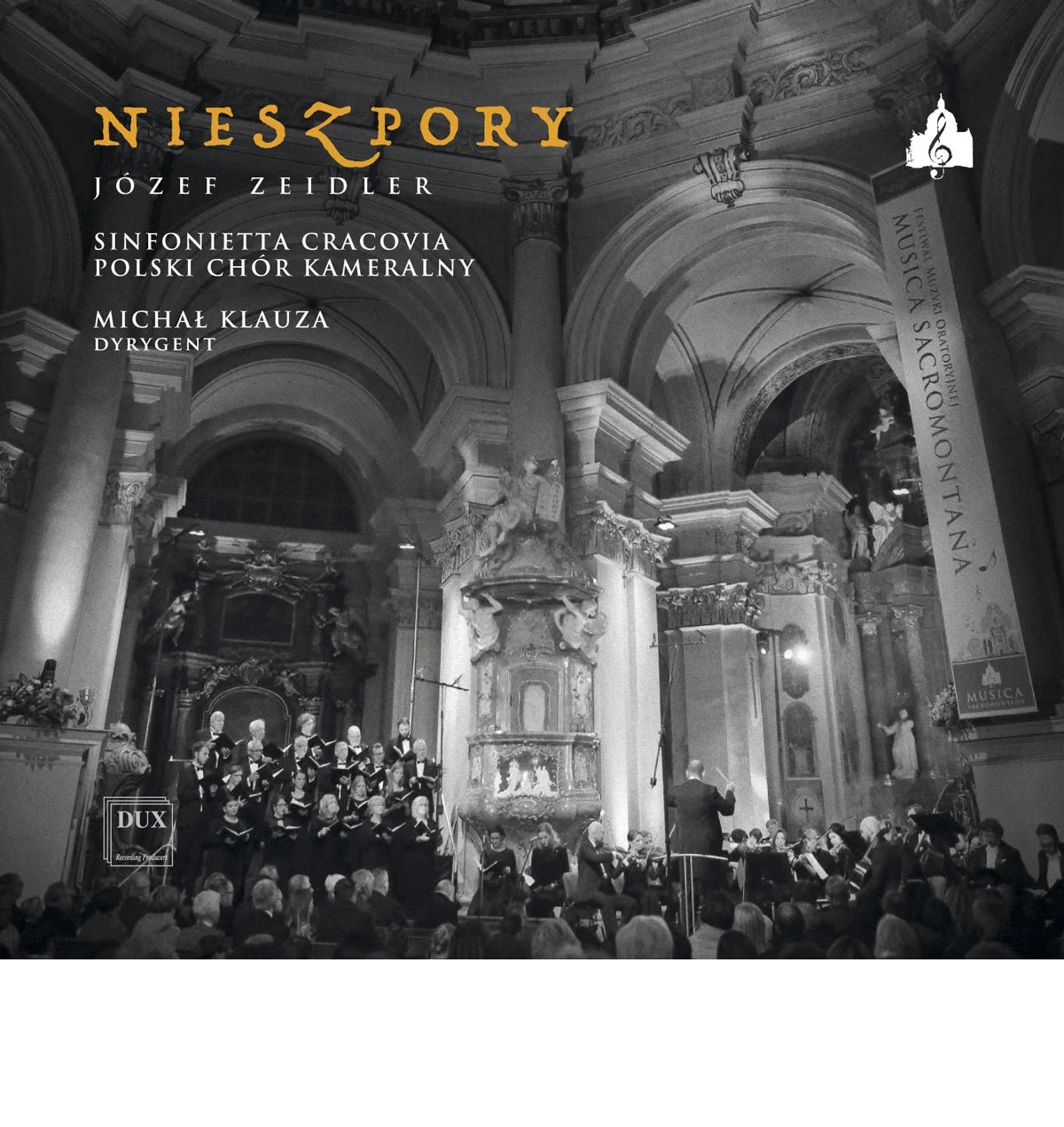
Zeidler is a classic. Forming his sound language in the early phase of this style, he became the creator of music that is illuminated by the spring sun of classicism. Thirty-something of his works have survived to this day. They constitute only a part of the entire oeuvre, but even in this number they are an example of extraordinary craftsmanship. Sixteen of them have already been performed at the Gostyń festival. They were masses, litanies, Marian antiphons, songs and a requiem. The seventeenth work in this series is the Vespers for solo voices, choir and orchestra, the musical notation of which has been preserved in the archives of the Gniezno Cathedral. They were performed as the main point of the festival program on October 5, 2019. And it was then that this recording was made.
The MUSICA SACROMONTANA festival serves to continue the intentions of the Filipino order, who wanted to evangelize through the broadly understood promotion of culture. It was thanks to their efforts that an excellent band was established there in the 17th century, and the most outstanding composers, led by Pelestrina, came to Gostyń. Many of them wrote pieces commissioned by the Congregation, and the fathers also filled the library with copies of works by the greatest masters.
Zeidler jest klasykiem. Formując swój język dźwiękowy we wczesnej fazie tego stylu, stał się twórcą muzyki, którą rozświetla wiosenne słońce klasycyzmu. Do naszych czasów przetrwało trzydzieści kilka jego dzieł. Stanowią tylko część całego oeuvre, lecz nawet w tej liczbie dają przykład niezwykłego kunsztu. Szesnaście z nich zabrzmiało już na gostyńskim festiwalu. Były to msze, litanie, antyfony maryjne, pieśni oraz requiem. Siedemnastym w tej serii dziełem są Nieszpory na głosy solowe, chór i orkiestrę, których nutowy zapis zachował się w archiwum Katedry Gnieźnieńskiej. Jako główny punkt festiwalowego programu zostały wykonane 5 października 2019 roku. I wtedy właśnie powstało ich niniejsze nagranie.
Festiwal MUSICA SACROMONTANA służy kontynuacji zamierzeń zakonu filipinów, którzy pragnęli ewangelizować poprzez szeroko pojętą propagację kultury. To dzięki ich staraniom już w XVII wieku powstała tam znakomita kapela, do Gostynia zjeżdżali najwybitniejsi kompozytorzy z Pelestriną na czele. Wielu z nich pisało utwory na zamówienie Zgromadzenia, ojcowie zapełniali też bibliotekę kopiami dzieł największych mistrzów.












 serpent.pl /
shop /
latest /
special offers /
new /
recommended /
labels /
artists /
bestsellers /
shipping costs /
help /
terms and conditions /
contact
serpent.pl /
shop /
latest /
special offers /
new /
recommended /
labels /
artists /
bestsellers /
shipping costs /
help /
terms and conditions /
contact