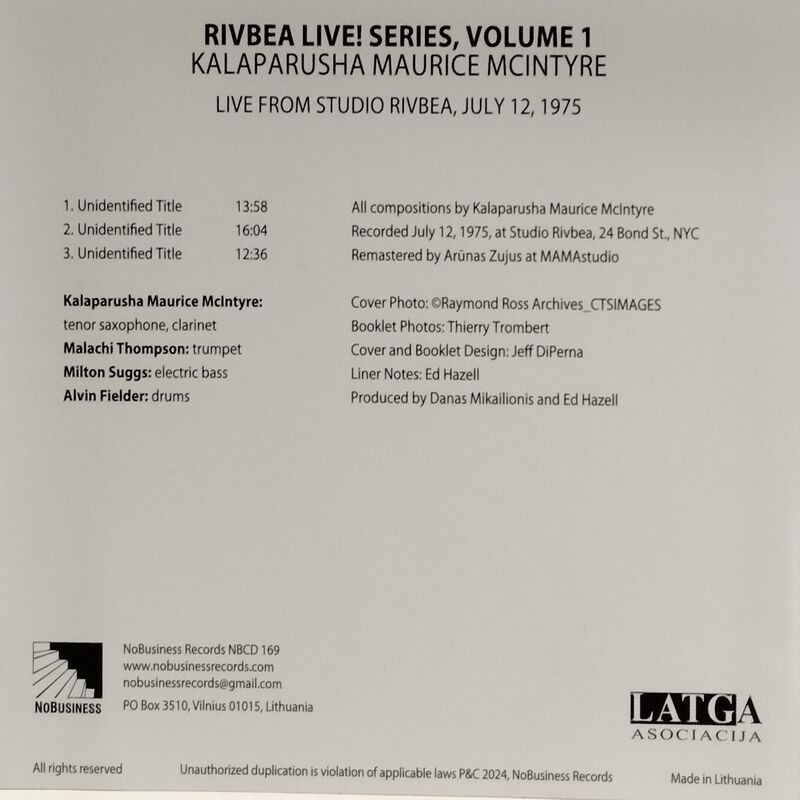
Kalaparusha Maurice McIntyre - tenor saxophone, clarinet
Malachi Thompson - trumpet
Milton Suggs - electric bass
Alvin Fielder - drums
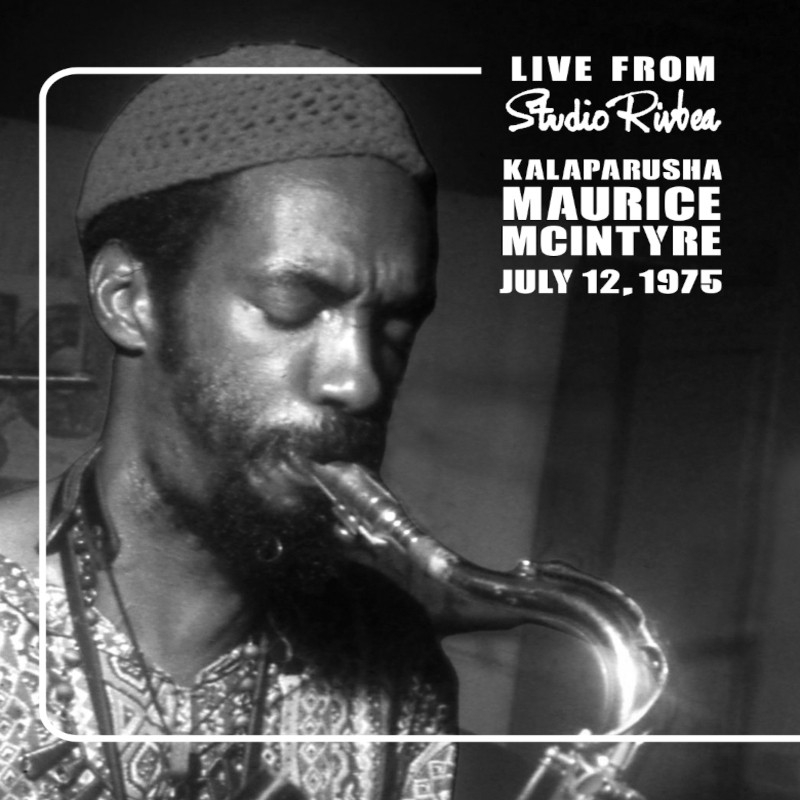
Recorded July 12, 1975 at Studio Rivbea, 24 Bond Street, NYC
Remastered by Arūnas Zujus at MAMAstudios, Vilnius, Lithuania
In 1970, Sam Rivers and his wife Bea created a studio-club in Harlem where big things were happening. The name RivBea Studio is easy to decipher, an anagram of the saxophonist's surname and his wife's name. Soon, RivBea Studio moved to the Soho district in New York, becoming one of the most important venues for presenting new jazz in the US. In addition to the bands led by Rivers, other heroes of the jazz revolt of the 1970s could be heard there. On July 12, 1975, Maurice McIntyre's Kalaparusha Quartet performed there, with Malachi Thompson on trumpet, Milton Suggs on bass, and Alvin Fielder on drums. This concert was part of Studio Rivbea's Summer Music Festival 1975.
Kalaparusha played in Roscoe Mitchell's sextet and Muhal Richard Abrams' groups before forming his own group Light. He recorded and performed with Julius Hemphill, Anthony Braxton, LeRoy Jenkins, Amina Claudine Myers, Wilbur Morris, Jerome Cooper, Warren Smith, Pheeroan akLaff and the Ethnic Heritage Ensemble.
The three untitled parts of this concert, each lasting a dozen or so minutes, are freely improvised, full of dense emotions, juicy free jazz stories, with sudden and surprising plot twists, it must be added. You can hear that the musicians react perfectly to each other, with such narrative variability, the collective improvisations are constantly boiling with emotions. Much of this is due to the work of Alvin Fielder, who can undoubtedly be said to be one of those drummers who revolutionized the concept of jazz rhythm. Dennis Gonzalez, Joel Futterman and Kidd Jordan knew this when they invited him to their bands.
You can hear this in the second part, when around the 3rd minute the powerful energy flowing to life from the drums is countered by Kalaparusha's saxophone, which reaches deeper and deeper. When three minutes later Malachi Thompson's trumpet replaces the leader's saxophone, it becomes divine. Thompson's expressive phrases, rough but full of invention, have a....... more
W 1970 roku Sam Rivers wraz z żoną Beą stworzyli studio-klub w Harlemie, w którym działy się rzeczy wielkie. Nazwa RivBea Studio jest prosta do rozszyfrowania, to anagram pochodzący od nazwiska saksofonisty i imienia jego żony. Dość szybko RivBea Studio przeniosło się do dzielnicy Soho w Nowym Jorku, stając się jednym z najważniejszych miejsc prezentacji nowego jazzu w USA. Poza zespołami prowadzonymi przez Riversa można tam było usłyszeć innych bohaterów jazzowej rewolty dekady lat 70.
12 lipca 1975 roku wystąpił tam kwartet Kalaparushy Maurice'a McIntyre'a z Malachi’em Thompsonem na trąbce, Miltonem Suggsem na basie i Alvinem Fielderem za perkusją. Koncert ten był częścią Studio Rivbea's Summer Music Festival 1975.
Kalaparusha zanim założył swoją własną grupę Light grał w sekstecie Roscoe Mitchella i grupach Muhala Richarda Abramsa. Nagrywał i koncertował z Juliusem Hemphillem, Anthonym Braxtonem, LeRoy'em Jenkinsem, Aminą Claudine Myers, Wilburem Morrisem, Jeromem Cooperem, Warrenem Smithem, Pheeroanem akLaffem oraz z Ethnic Heritage Ensemble.
Trzy kilkunastominutowe, niezatytułowane części tego koncertu to swobodnie improwizowane, naładowane gęstymi emocjami soczyste free jazzowe opowieści, z nagłymi i zaskakującymi zwrotami akcji trzeba dodać. Słychać, że muzycy doskonale na siebie reagują, przy takiej zmienności narracyjnej, kolektywne improwizacje nieustająco kipią od emocji. Wielka w tym zasługa w pracy Alvina Fieldera, o którym bez wątpienia można powiedzieć, że był jednym z tych drummerów, który zrewolucjonizował pojęcie jazzowej rytmiki. Wiedzieli o tym Dennis Gonzalez, Joel Futterman i Kidd Jordan zapraszając go do swoich zespołów.
Słychać to chociażby w drugiej części, kiedy to około 3 minuty potężna energia do życia płynąca od strony perkusji zostaje skontrowana przez sięgający coraz głębiej saksofon Kalaparushy. Gdy trzy minuty później trąbka Malachi'a Thompsona zastępuje saksofon lidera robi się bosko. Ekspresyjne fr....... more












 serpent.pl /
shop /
latest /
special offers /
new /
recommended /
labels /
artists /
bestsellers /
shipping costs /
help /
terms and conditions /
contact
serpent.pl /
shop /
latest /
special offers /
new /
recommended /
labels /
artists /
bestsellers /
shipping costs /
help /
terms and conditions /
contact