This is not pop music. These are songs about death and two-legged dogs.
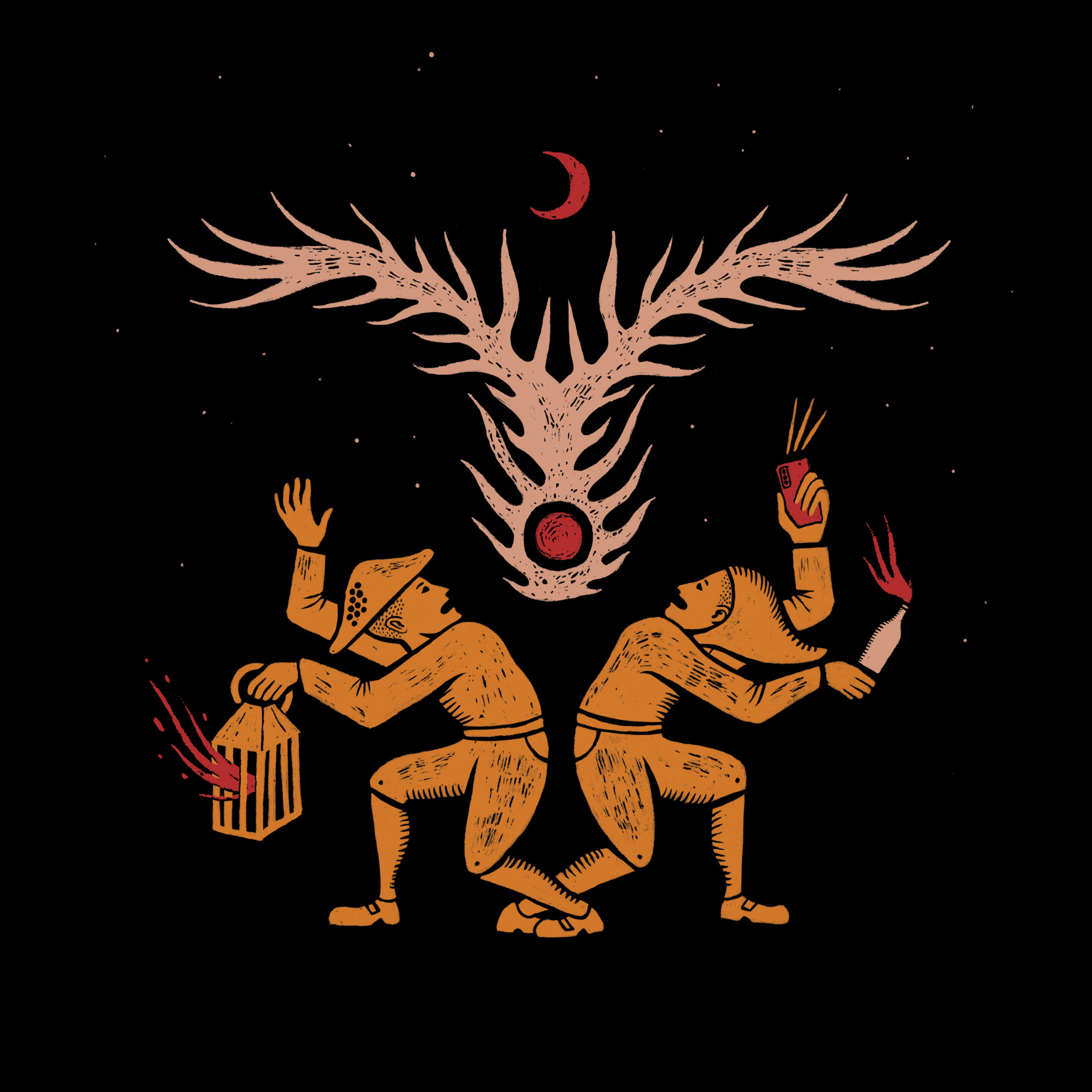
Somewhere between the Japanese tour and the Glastonbury performance, the gentlemen from Kirszenbaum kidnapped producer and multi-instrumentalist Andrzej "Gienia" Markowski (Jamal, Zalewski, WaluśKraksaKryzys) and hid in the Zagroda Magija, a place of great merit for Polish art, in Orelek. There, they recorded an album full of anxiety, about sons, Masons and Montezuma's dreams. Instead of breaking down the door of perception with a crowbar, "Rave macabre" puts its foot in it with a Bulgakov low kick. In the alien, they look for man, in the pandemic for awakening, in life for death, in death for life. Does it find it? Let the official marketing description of the album, which the Kirszen violinist dreamed of one of those nights, serve as the answer:
"We stand where the synczyzna was supposed to be. We are younger than the Precambrian, but older than the end. From a thousand of our heads, heads were created, from a thousand of our legs - scissors, from a thousand of our hands - hand-held hands. The body is one." One must imagine Sisyphus dancing
To nie jest muzyka rozrywkowa. To piosenki o śmierci i dwunogich psach.
Gdzieś pomiędzy trasą po Japonii a występem na Glastonbury, panowie z Kirszenbaum porwali producenta i multiinstrumentalistę Andrzeja „Gienię” Markowskiego (Jamal, Zalewski, WaluśKraksaKryzys) i zaszyli się w zasłużonej dla polskiej sztuki, oreleckiej Zagrodzie Magija. Nagrali tam płytę pełną niepokoju, o synach, masonach i snach Montezumy. Miast wyważać jednak drzwi percepcji łomem, „Rave macabre” bułhakowskim low kickiem wkłada w nie stopę. W obcym szuka człowieka, w pandemii przebudzenia, w życiu śmierci, w śmierci życia. Czy znajduje? Niech za odpowiedź posłuży oficjalny opis marketingowy płyty, jaki przyśnił się kirszenskrzypkowi jednej z tamtych nocy:
„My stoimy tam, gdzie miała być synczyzna. Jesteśmy młodsi niż prekambr, ale starsi niż kres. Z tysiąca naszych głów powstały głowice, z tysiąca naszych nóg – nożyce, z tysiąca naszych rąk – rączyce. Korpus jest jeden”. Trzeba wyobrażać sobie Syzyfa tańczącym









 serpent.pl /
shop /
latest /
special offers /
new /
recommended /
labels /
artists /
bestsellers /
shipping costs /
help /
terms and conditions /
contact
serpent.pl /
shop /
latest /
special offers /
new /
recommended /
labels /
artists /
bestsellers /
shipping costs /
help /
terms and conditions /
contact