Editor's Info
The Estonian, Copenhagen based, composer and saxophonist Maria Faust (1979) grew up in The Soviet Union. Here, the march, as a propaganda tool, was part of the soundtrack of her daily life. Early on, she as well as many other citizens of Soviet Union, got used to reading the world between the lines, using the music as a hiding place and learning that the art.… Is often the only place to find freedom and truth.
Maria Faust’s works are known for its social criticism, and she is not afraid to voice political views in her music. She believes strongly that the artist has been given a voice and is obligated to use it. Sacrum Facere (in Latin human scarification) was created by Faust in 2014 for not just being a band that plays her music but for carrying the musical and philosophical ideas. With Sacrum Facere’s two previous albums: “Sacrum Facere” and “Organ”, Faust addressed the subject of women’s place and purpose in society (christian and non- christian) and female identity in reproductive purposes and rights.
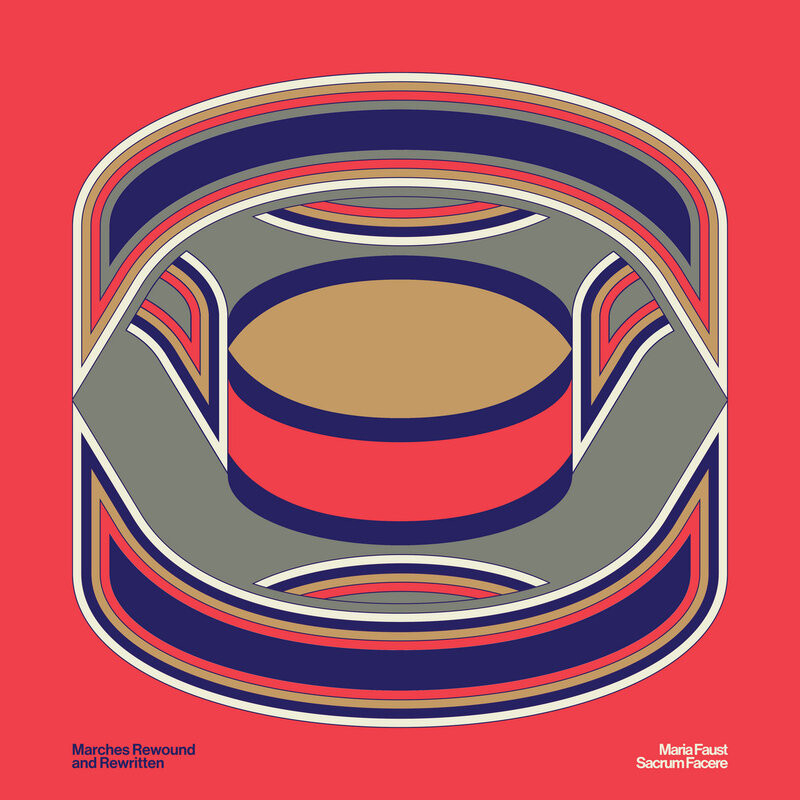
MRR is a social critical work that brings attention to the ancient pain points of our world- tyranny, hierarchy, violence, the value of human life and is a follow-up to the choral work “Mass of Mary"which was written for the victims of domestic violence. How wars begin is like a chicken - egg question: Where does it start? How do we break the circle of violence? MRR addresses both the domestic war in our homes and violence on the grand scale as seen in war between countries and beliefs.
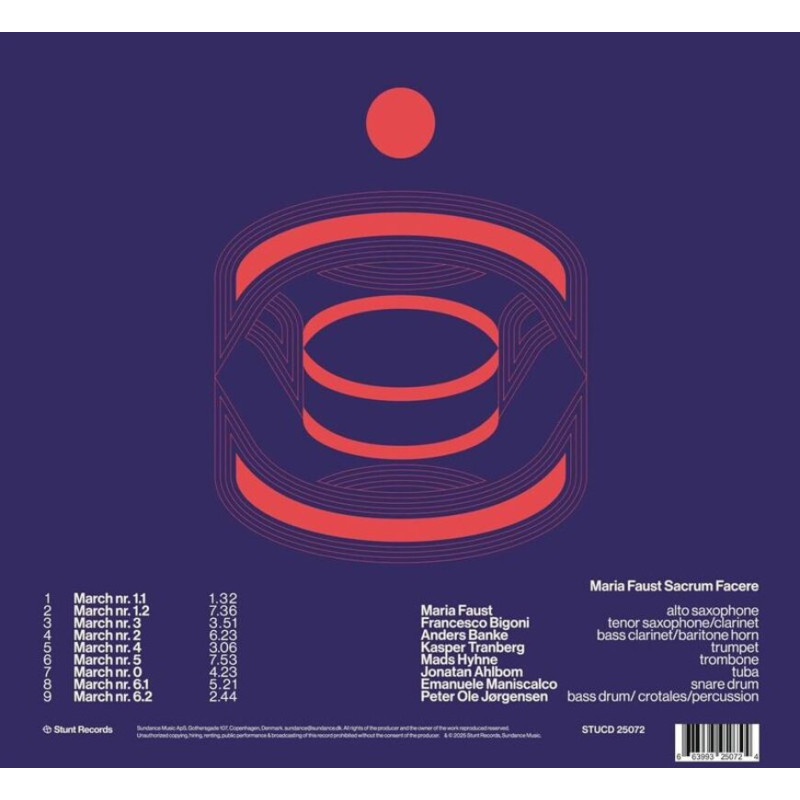
As on the preceding Sacrum Facere’s albums, the very instrumentation has great symbolic meaning. This time the focus is on the snare drum. By taking the repetitive elements of the propaganda music of dictatorships and turning them upside down, slowing them down, rewinding them and zooming in — Maria Faust has effectively created a new map of the march, exposing it, shattering....... more
Maria Faust (rocznik 1979), estońska kompozytorka i saksofonistka dorastała w Związku Radzieckim. Dzisiaj mieszka w Kopenhadze i od lat jest jednym z filarów kreatywnego, europejskiego jazzu.
Najnowsza płyta jej sztandarowej międzynarodowej formacji Sacrum Facere "Marches Rewound & Rewritten" wraca do jej traumatycznych doświadczeń z dzieciństwa, przesyconego sowiecką propagandą, która nie oszczędzała także muzyki. Przecież coroczne parady wojskowe na Kremlu i ich klony w stolicach republik radzieckich i krajów satelickich nie mogłyby odbywać się bez muzyki marszowej.
Istniejąca od 2014 roku grupa Sacrum Facere to swoisty poligon dla rozwijanych przez Faust koncepcji muzycznych, przesyconych społecznym aktywizmem. Sama swoją metodę nazywa "memory analysis/analizą pamięci" — jest to mieszanka pamięci zbiorowej, praktyki przebaczania, badań historycznych i bardziej pozawerbalnych wspomnień — wszystko po to aby stworzyć serię konceptualnych projektów, które sięgając po muzyczne tradycje z przeszłości nadają im nową dynamikę i kształt.
Estonka nie boi się zabierać głos w nurtujących ją sprawach. Odwaga cywilna doskonale rymuje się w jej przypadku z odwagą artystyczną. Jej kolejne płyty zawsze są o czymś, zawsze poruszają emocje słuchacza, nigdy nie są połyskującymi błyskotkami, zorientowanymi tylko na sukces komercyjny!
Tak jest i tym razem, oktet międzynarodowych improwizatorów z saksofonistą Francesco Bigonim (Benoît Delbecq, Wayne Horvitz, Jim Black, Mark Solborg, Susana Santos Silva), czy drummerem Peterem Ole Jørgensenem, nestorem jazzowej awangardy (John Tchicai, Evan Parker, Mats Gustafsson, Peter Brötzmann, David Thomas And Foreigners, Torden Kvartetten, Pere Ubu) na czele wiedzie nas emocjonującą drogą bez pustych przebiegów. Porywająca ekspresja autorskich kompozycji Marii Faust, temperamentne interakcje, dronowa struktura pełna zjawiskowych repetycji, co rusz wydobywa na powierzchnię niespieszne rytmy i nieuchwytną....... more












 serpent.pl /
shop /
latest /
special offers /
new /
recommended /
labels /
artists /
bestsellers /
shipping costs /
help /
terms and conditions /
contact
serpent.pl /
shop /
latest /
special offers /
new /
recommended /
labels /
artists /
bestsellers /
shipping costs /
help /
terms and conditions /
contact