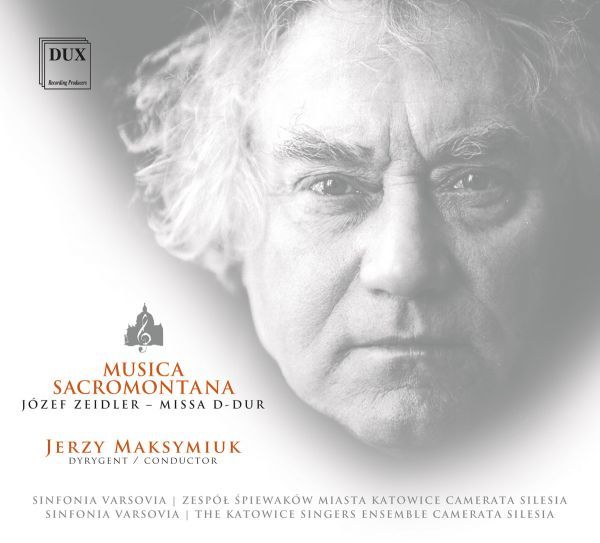
performers:
Sinfonia Varsovia
Zespół Śpiewaków Miasta Katowice Camerata Silesia
Aleksandra Kubas-Kruk /sopran/
Anna Radziejewska /mezzosopran/
Jarosław Bręk /bas/
Jerzy Maksymiuk /dyrygent/
Karol Kozłowski /tenor/
The 12th Musica Sacromontana Festival (2017) saw the contemporary premiere of another work by Józef Zeidler, the spiritual patron of this event. The Mass in D major (just like the monumental Mass ex D) has been preserved in the collections of Die Bayerische Staatsbibliothek in Munich. The Mass in D major seems to be a more personal and natural work, where simplicity gains the features of conscious artistry. The music is maximally organised, both in the construction of individual phrases and larger formal entities.
The MUSICA SACROMONTANA Festival is meant to continue the intentions of the Oratory of Saint Philip Neri, who wanted to evangelise through the broadly understood propagation of culture. It is thanks to their efforts that in the 17th century a great ensemble was created there, and the greatest composers, including Palestrina, came to Gostyń. Many of them wrote pieces on commission of the Congregation; fathers also filled the library with copies of works of the greatest masters.
12. Festiwal Musica Sacromontana (2017) przyniósł współczesne prawykonanie kolejnego dzieła Józefa Zeidlera, duchowego patrona tej imprezy.
Msza D-dur (podobnie jak monumentalna Msza ex D) zachowała się w zbiorach Die Bayerische Staatsbibliothek w Monachium. Msza D-dur wydaje się dziełem bardziej osobistym i naturalnym, gdzie prostota zyskuje cechy świadomego artyzmu. Muzyka jest maksymalnie uporządkowana, zarówno w budowie poszczególnych fraz, jak i większych całości formalnych.
Festiwal MUSICA SACROMONTANA służy kontynuacji zamierzeń zakonu filipinów, którzy pragnęli ewangelizować poprzez szeroko pojętą propagację kultury. To dzięki ich staraniom już w XVII wieku powstała tam znakomita kapela, do Gostynia zjeżdżali najwybitniejsi kompozytorzy z Pelestriną na czele. Wielu z nich pisało utwory na zamówienie Zgromadzenia, ojcowie zapełniali też bibliotekę kopiami dzieł największych mistrzów.










 serpent.pl /
shop /
latest /
special offers /
new /
recommended /
labels /
artists /
bestsellers /
shipping costs /
help /
terms and conditions /
contact
serpent.pl /
shop /
latest /
special offers /
new /
recommended /
labels /
artists /
bestsellers /
shipping costs /
help /
terms and conditions /
contact