Editor's info:
In the popular imagination of the big, wide world Pandit Ravi Shankar (1920–2012) was the foremost champion and populariser of the Hindustani musical tradition. His rise may have been accelerated through his associations with the Beatles and Byrds but the seeds had been planted several decades before the ‘sitary’ 1960s. His rise was a confluence of many factors and cultural tropes. By 1966 he had become both the most famous Indian musician on the planet and one of the subcontinent’s most familiar names. In terms of recognition, Shankar ranked alongside Tagore, Gandhi and Nehru.
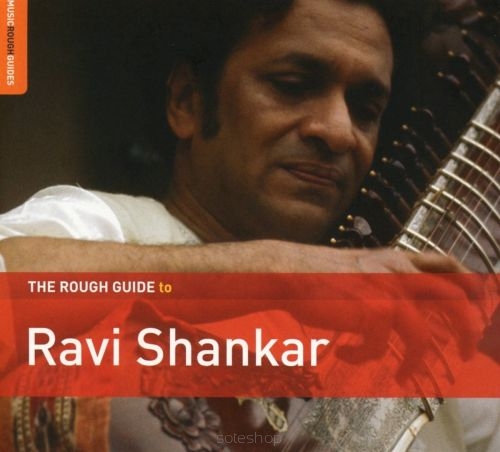
Compiled by Ken Hunt, Pandit Ravi Shankar’s approved biographer and foremost exponent of Indian classical music, this Rough Guide charts Ravi Shankar’s rise to global stardom and includes some of his most memorable performances of six different ragas. Ken Hunt has interwoven three strands into this anthology. To begin at the very beginning, the first is Bengal. Bengali culture supplied Ravi Shankar with his roots and mother tongue. He would weave any number of Bengali secular, devotional, vernacular and folk songs and tunes into his repertoire. ‘Bangla Kirtan’ is an unspecified kirtan – a form of religious narrative.
Recorded in the age of shellac ‘Bangla Kirtan’ reminds how the sitarist epitomises changes to art in the age of mechanical reproduction – the only major technological sound retrieval vehicle he missed was cylinder recordings. Adapting spontaneous creativity to technological limitations such as length and what microphones could capture imposed new disciplines.
The two recordings of his raga composition 'Tilak Shyam' reflect 78 and 33 rpm technology’s constraints and opportunities to think afresh. Raga is a continual well-spring ever refreshed. Across India one of the primary elements that replenishes and refreshes the water table and surf....... more
Ravi Shankar - ambasador kultury indyjskiej, wirtuoz sitar, ten, ktory wprowadził indyjską muzykę w świat zachodniej popkultury lat 60tych i 70tych. Artysta, za życia obwołany "Mozartem sitara", bez wątpienia najsłynniejszy indyjski muzyk na świecie, przez George'a Harrisona z The Beatles nazwany "ojcem chrzestnym world music".
Jego muzyka przekraczała zarówno mody jak i kulturowe bariery. W dzieciństwie wraz młodszym bratem Uday Shankarem (tancerzem) i ojcem przeniósł się do Europy. W 1930 przeprowadził się do Paryża. W 1938 powrócił do Indii i zaczął kształcić się jako muzyk. Jego mistrzem był Ustad Baba Allauddin Khan.
W 1954 pierwszy raz publicznie wystąpił poza Indiami, grając na sitarze w Związku Radzieckim, a potem w Europie Zachodniej i w USA. Szerszej publiczności, zwłaszcza młodzieżowej, stał się znany szczególnie od czasu, kiedy członek grupy The Beatles, George Harrison zainteresował się grą na sitarze w 1965. Wskutek kontaktu z Harrisonem Ravi Shankar został zaproszony w 1967 do występu na festiwalu muzyki pop w Monterey w Kalifornii, jak również występował w Woodstock w 1969.
Gdy zmarł w 2012 roku, kancelaria premiera Indii Manmohana Singha napisała na Twitterze, że wraz z Ravim Shankarem, "narodowym skarbem i ambasadorem kulturowego dziedzictwa Indii na świecie, skończyła się pewna epoka". Trzykrotny zdobywca prestiżowej amerykańskiej nagrody muzycznej Grammy dzielił życie między Indie i Stany Zjednoczone.
Ravi Shankar jest ojcem dwóch wybitnych artystek - Norah Jones i Anoushki Shankar. To na cześć Shankara Alice i John Coltrane'owie nazwali swojego syna Ravi.










 serpent.pl /
shop /
latest /
special offers /
new /
recommended /
labels /
artists /
bestsellers /
shipping costs /
help /
terms and conditions /
contact
serpent.pl /
shop /
latest /
special offers /
new /
recommended /
labels /
artists /
bestsellers /
shipping costs /
help /
terms and conditions /
contact