muzycy:
André Bak (tp), Rolf Thofte Sorensen (tp), Magnus Oseth (tp, flh), Maj Berit Guassora (tp), Göran Abelli (tb), Mikkel Vig Aagaard (tb), Anders Larson (tb), Andre Jensen (tb), Jakob Lundbak (as), Magnus Thuelund (as), Roald Elm Larsen (ts), Ida Karlsson (ts), Aske Drasbak (bs, bcl), Viktor Sandström (g), Johannes Vaht (b), Henrik Holst Hansen (dr), Kathrine Windfeld (p), Claus Sorenseen (cond)
Editor's info:
The orca is a beautiful animal. Graceful and harmoniously shaped, it even bears what we humans see as a friendly facial expression. But make no mistake – the aptly named killer whale is also a peerlessly ruthless and greedy predator, exploiting its speed and agility to catch and devour all other kinds of sea creatures it encounters on its journeys through the oceans. All oceans, in fact.
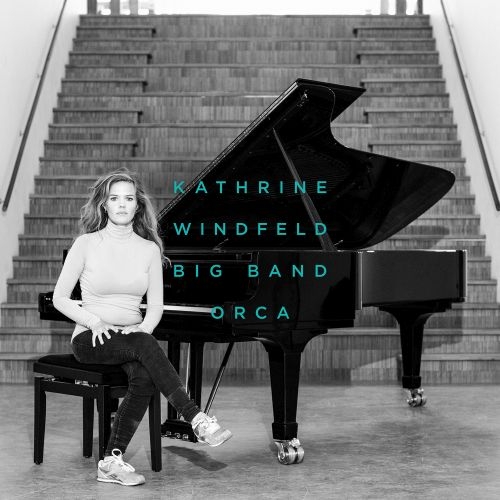
We can hear how it sounds when a killer whale hunts its prey on this album’s title track, where trumpeter Rolf Thofte Lokke and baritone saxophonist Aske Drasbak chase each other accompanied by the ensemble’s furious counterpoint over the catchy melodic motif. Europe’s new jazz big band star, Danish Kathrine Windfeld, has captured the essence of the sea predator on her third release with her own music with her own big band, each composition largely devoted to maritime themes.
It’s no surprise that she is fascinated by the sea. Windfeld was born and raised along some of the most picturesque waters in the world – the South Funen Archipelago in Denmark, the country with the longest coastline in relation to its size. The archipelago stretches out from her town, Svendborg, with heavy sea traffic, and highlighted by its beautiful natural land and seascapes. No wonder, then, that her fascination for a remembrance of all this is paired with her strong impressionistic genes and transformed into music.
In her instrumental choices, we really hear how dark Dark Navy can be. With her rhythmic dance in Ferry, we’re on board the busy vessel that will take us from one island to another, and the muted and busy traffic of the fish at the bottom of the sea get a voice in the short, snatched melodic motifs and the advancing ostinato in Fish. Seaweed not only bends softly back and forth for gentle currents on the ocean floor, there are also far more violent movements when the elements rag....... more
To druga big bandowa rewelacja 2020 roku. Pierwsza to oczywiście "Music of Wayne Shorter" Jazz at Lincoln Center Orchestra with Wynton Marsalis & Wayne Shorter (Blue Engine Records, 2020). Ale tego można się było spodziewać, Wynton Marsalis uczynił z Jazz at Lincoln Center Orchestra jednym z najlepszych big bandów w historii jazzu. Jednak to, że raczej mało znana Dunka, z założonym przez siebie w 2014 roku big bandem, wejdzie w szranki z samym Wyntonem, nie mógł przewidzieć chyba nikt.
"Orca" to już trzecia płyta tej nieprzeciętnie uzdolnionej liderki jazzowej orkiestry. Komponuje, aranżuje oraz gra na fortepianie. Debiutanckim albumem "Aircraft" zdobyła tytuł Młodego Talentu Roku w Danii. Poprzednim "Latency" (Stunt Records, 2018) zyskała pochwały także poza Skandynawią. Teraz prezentuje album, który bez kompleksów sytuuje się obok nagrań innych wielkich bandleadrek w historii, jak Toshiko Akyioshi, Mary Lou Williams, Carla Bley czy Maria Schneider.
Tytuł płyty "Orca" nie jest przypadkowy. Orki to prawdziwy postrach oceanów. Są największymi i najgroźniejszymi morskimi drapieżnikami. Chociaż kultura masowa stworzyła obraz przyjaznego, uroczego walenia, orka jest bezwzględnym drapieżnikiem, który wykorzystuje swoją zwinność i szybkość, aby polować zarówno na mniejsze foki i pingwiny, ale także na olbrzymiego płetwala błękitnego. Gdy dopadną zdobycz, zanim ją zjedzą bawią się nią, podobnie jak kot myszą.
Niepohamowany zapał, niezwykła giętkość i zwinność tworzących orkiestrę muzyków, wyborna zespołowa współpraca to niejedyne podobieństwa do tytułowych morskich "słodziaków". Już w otwierającym płytę "Undertow" słyszymy orkę ścigającą swoją ofiarę. Oto trębacz Rolf Thofte Lokke i saksofonista barytonowy Aske Drabak prześcigają się nawzajem, w towarzystwie rozpędzającego się big-bandu, od kolektywnego kontrapunktu do chwytliwego melodyjnego riffu. Skandynawowie skutecznie poszerzają zakres ekspresji i wprowadzają odważne instr....... more










 serpent.pl /
shop /
latest /
special offers /
new /
recommended /
labels /
artists /
bestsellers /
shipping costs /
help /
terms and conditions /
contact
serpent.pl /
shop /
latest /
special offers /
new /
recommended /
labels /
artists /
bestsellers /
shipping costs /
help /
terms and conditions /
contact