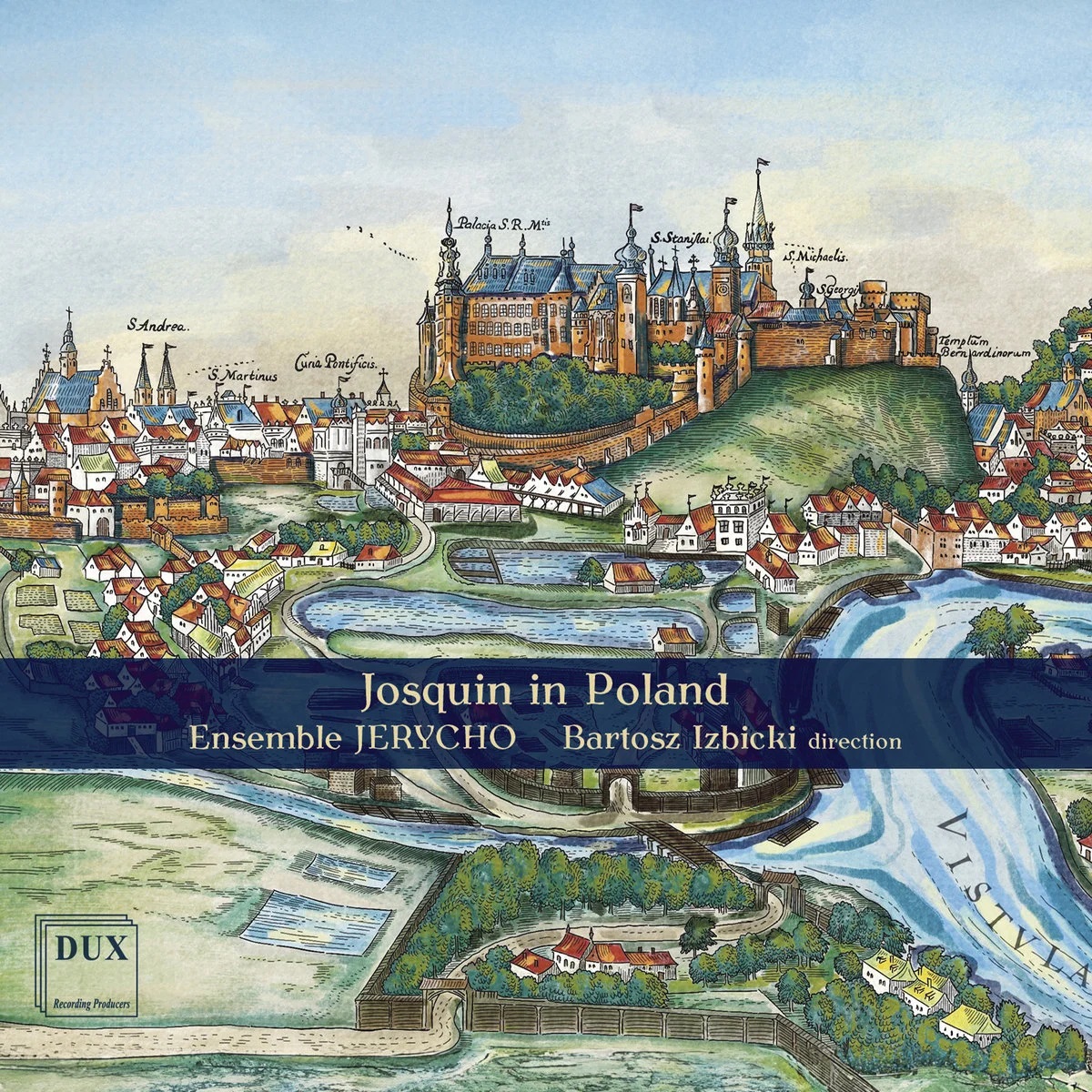
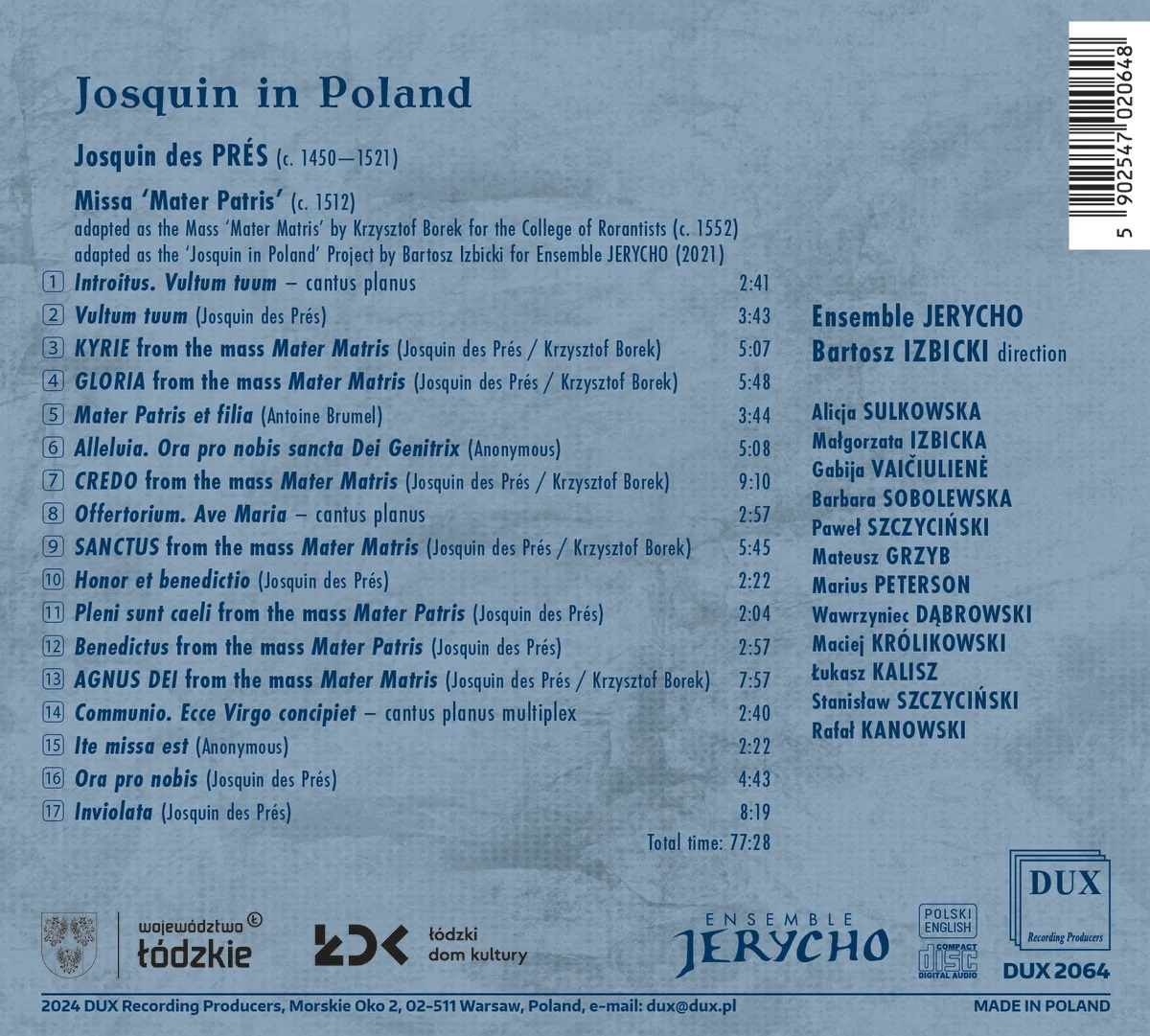
The Ensemble Jerycho album is dedicated to the work of one of the most famous composers of the Renaissance, Josquin des Prés, in reference to the 500th anniversary of his death, which took place in 2021. The album includes his Missa "Mater Patris", which was already developed in the 16th century by a Pole, Krzysztof Borek for the needs of the Rorantists College in Kraków and received the new name "Mater Matris". Supplemented by him with additional voices, it enriched the collections used for the setting of solemn masses, which were honored by a four-voice collegiate choir. The musical language of the work can be considered anachronistic in the context of other compositions by des Prés, the composer reaches for old techniques here, including in the field of voice leading.
Ensemble Jerycho presents the music of the Renaissance master in a dynamic, colorful way, restoring the sound of the piece in the original notation, hence the extension of Borek's version with parts that were removed by him. The whole is complemented by other vocal works by des Prés, as well as a motet by Antoine Brumel, which became the musical basis for the mass.
Płyta Ensemble Jerycho poświęcona jest twórczości jednego z najbardziej znanych kompozytorów epoki renesansu Josquina des Prés, w nawiązaniu do 500 rocznicy jego śmierci, która miała miejsce w 2021 roku. Na krążku znalazła się jego Missa „Mater Patris”, która już w XVI wieku została opracowana przez Polaka, Krzysztofa Borka na potrzeby Kolegium Rorantystów z Krakowa i otrzymała nową nazwę „Mater Matris”. Uzupełniona przez niego o dodatkowe głosy, wzbogaciła zbiory służące oprawie uroczystych mszy, które uświetniał czterogłosowy chór kolegialny. Język muzyczny dzieła na tle innych kompozycji des Prés można uznać za anachroniczny, kompozytor sięga tu po stare techniki, m.in. w zakresie prowadzenia głosów.
Ensemble Jerycho prezentuje muzykę renesansowego mistrza w sposób dynamiczny, pełen kolorów, przywracając brzmienie utworu w oryginalnym zapisie, stąd rozszerzenie wersji Borka o części, które zostały przez niego usunięte. Całości dopełniają inne utwory wokalne des Prés, a także motet Antoine’a Brumela, który stał się muzyczną kanwą mszy.












 serpent.pl /
shop /
latest /
special offers /
new /
recommended /
labels /
artists /
bestsellers /
shipping costs /
help /
terms and conditions /
contact
serpent.pl /
shop /
latest /
special offers /
new /
recommended /
labels /
artists /
bestsellers /
shipping costs /
help /
terms and conditions /
contact