muzycy:
Marc Copland (piano)
Robin Verheyen (saxophone)
Goeyvaerts String Trio
Editor's Info
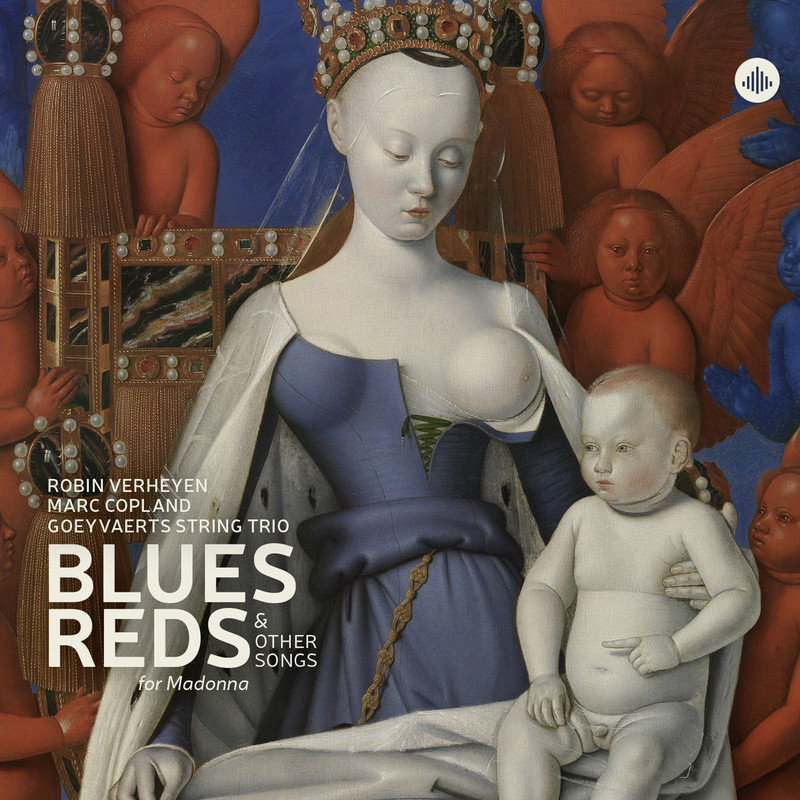
In this day and age, who still writes love songs for a chosen woman of yesteryear? With sounds that whistle deep blue and remind you of the blues - the origins of jazz? - in his new composition Robin Verheyen takes colors from Jean Fouquet’s ‘Madonna’ and assigns them to his tenor and soprano, the three musicians of the Goeyvaerts String Trio and the 88 keys of Marc Copland’s piano.
The masterpiece ‘Madonna’ in the Royal Museum of Fine Arts Antwerp dates to around 1452 and is the right half of a diptych. The other piece, in Berlin, depicts the client of this work of art.. And his patron saint. Together, they form the so-called Melun diptych. In Antwerp you can see a ‘Maria Lactans’: the intimate theme of a mother breastfeeding her child. Because the subject was always updated to the fashion, taste or insights of the time, it continues to give new meaning.
In Master Fouquet’s version, seraphs and cherubs appear. Throne and crown also replace the old-fashioned Gothic gold aureole. But the Madonna remains exalted with all good things: ‘de tous bien plaine’. That is certainly how the coveted chanson by Hayne van Gizhegem from Fouquet’s time sounds (which was incorporated by Robin Verheyen into his composition). They both free their art.. From devotion and cautiously put the autonomous aesthetic experience first. Mary becomes heavenly and profane, simultaneously. Her ivory skin remains unblemished, but - so the gossip of the time wants: “Isn’t that Agnes Sorel”, the mistress of the French king? Is the most beautiful woman of the beau-monde a model for the Mother of God?
In ‘Blues, Reds and Other Songs’, Robin Verheyen draws inspiration from the characteristic harmony of the budding renaissance with quotes (such as the hymn Ave Maris Stella), canon techniques and faux-bourdon. Could the musical ornaments and fugal imitations of th....... more
Co robił doskonały jazzowy saksofonista Robin Verheyen w muzeum w Antwerpii?
Podziwiał "najbardziej zmysłowy wizerunek Madonny, jaki powstał w średniowieczu", bo taką ma opinię obraz "Madonna w otoczeniu serafinów i cherubinów" pędzla francuskiego malarza Jeana Fouqueta, który powstał ok. 1450 roku. Jest on prezentowany w Koninklijk Museum voor Schone Kunsten w Antwerpii.
Współpracownik Roya Hargrove'a, Marii Schneider, Branforda Marsalisa i Tootsa Thielemansa od dekady pracuje nad projektem inspirowanym dorobkiem Guillaume'a de Machaut, najbardziej wszechstronnego przedstawiciela XIV-wiecznej Ars nova. Płyta "Blues, Reds & Other Songs for Madonna" to owoc tej fascynacji.
Robin Verheyen czerpie inspirację z charakterystycznej harmonii muzyki wczesnego renesansu, z cytatami (takimi jak hymn "Ave Maris Stella") i technikami kanonicznymi dla muzyki tego okresu. Czy muzyczne ornamenty i imitacje fug z tamtego okresu zapowiadały narodziny jazzu?
Instrument lidera (saksofon sopranowy i tenorowy) i zakres repertuarowy rodzi skojarzenia z legendarną płytą Jana Garbarka i Hilliard Ensemble "Officium" (ECM, 1993). Jednak na tym kończą się analogie, w przeciwieństwie do "Officium" mamy do czynienia z oryginalnymi, współczesnymi kompozycjami, tutaj autorstwa saksofonisty Robina Verheyena. Po drugie pozbawiona ludzkiego głosu obsada z pianistą Markiem Coplandem, nazywanym królem harmonii i wyspecjalizowane w wykonawstwie muzyki XX i XXI wieku - Goeyvaerts String Trio tworzy odmienne środowisko muzyczne.
"Madonna w otoczeniu serafinów i cherubinów" Fouqueta oddziałuje wielowarstwowo, Tron otacza ciasny tłum cherubinów i serafinów, które zdają się ów tron unosić w niebieskiej poświacie Raju. Nadprzyrodzoność Madonny onieśmiela, zachwyca i uwodzi. Kompozycja składa się z różnych warstw. W obrazie jest to reprezentowane przez harmonię między poziomem, pionem i sugestią głębi z planem przednim, środkowym i tylnym.
Polifonia drugiej części nag....... more












 serpent.pl /
shop /
latest /
special offers /
new /
recommended /
labels /
artists /
bestsellers /
shipping costs /
help /
terms and conditions /
contact
serpent.pl /
shop /
latest /
special offers /
new /
recommended /
labels /
artists /
bestsellers /
shipping costs /
help /
terms and conditions /
contact