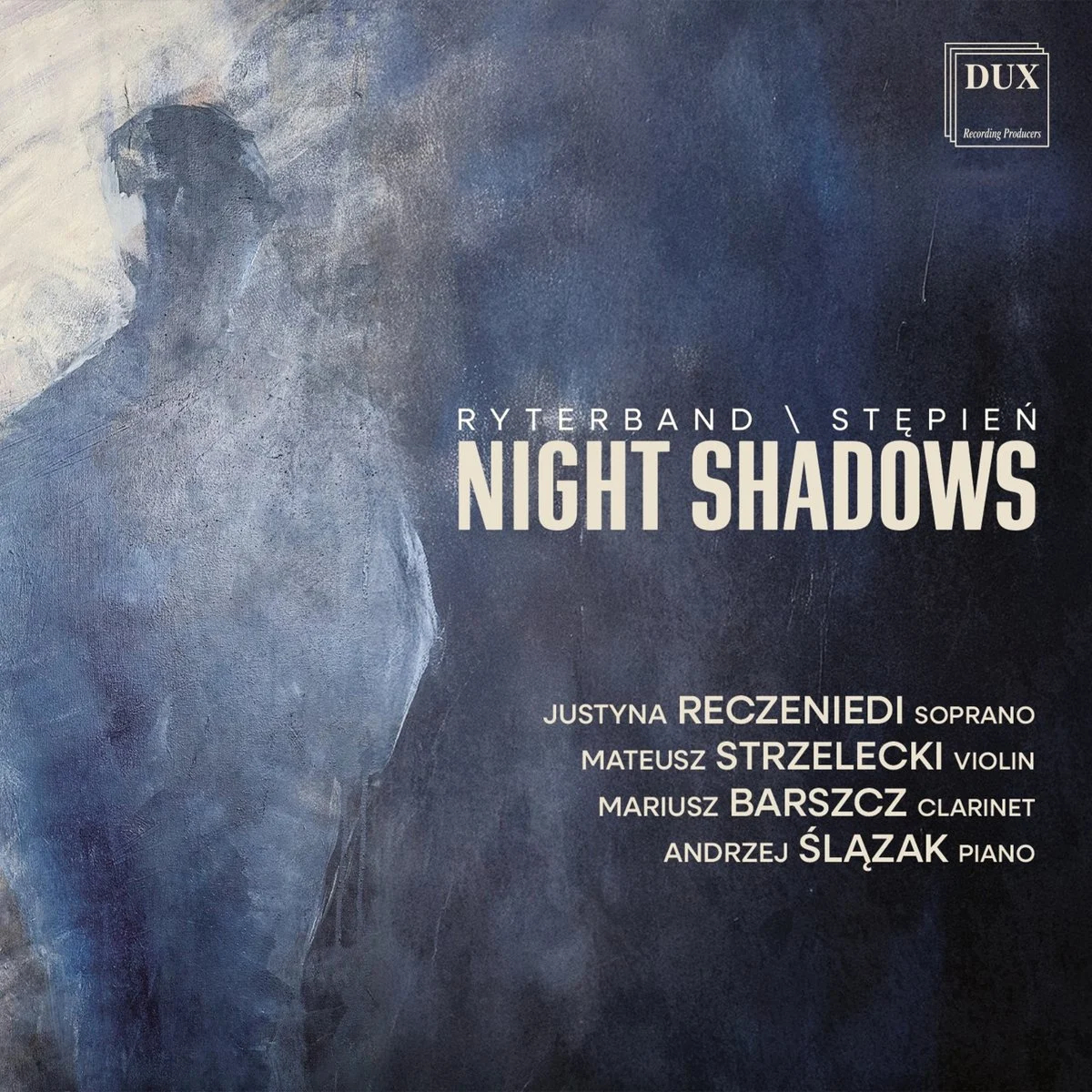
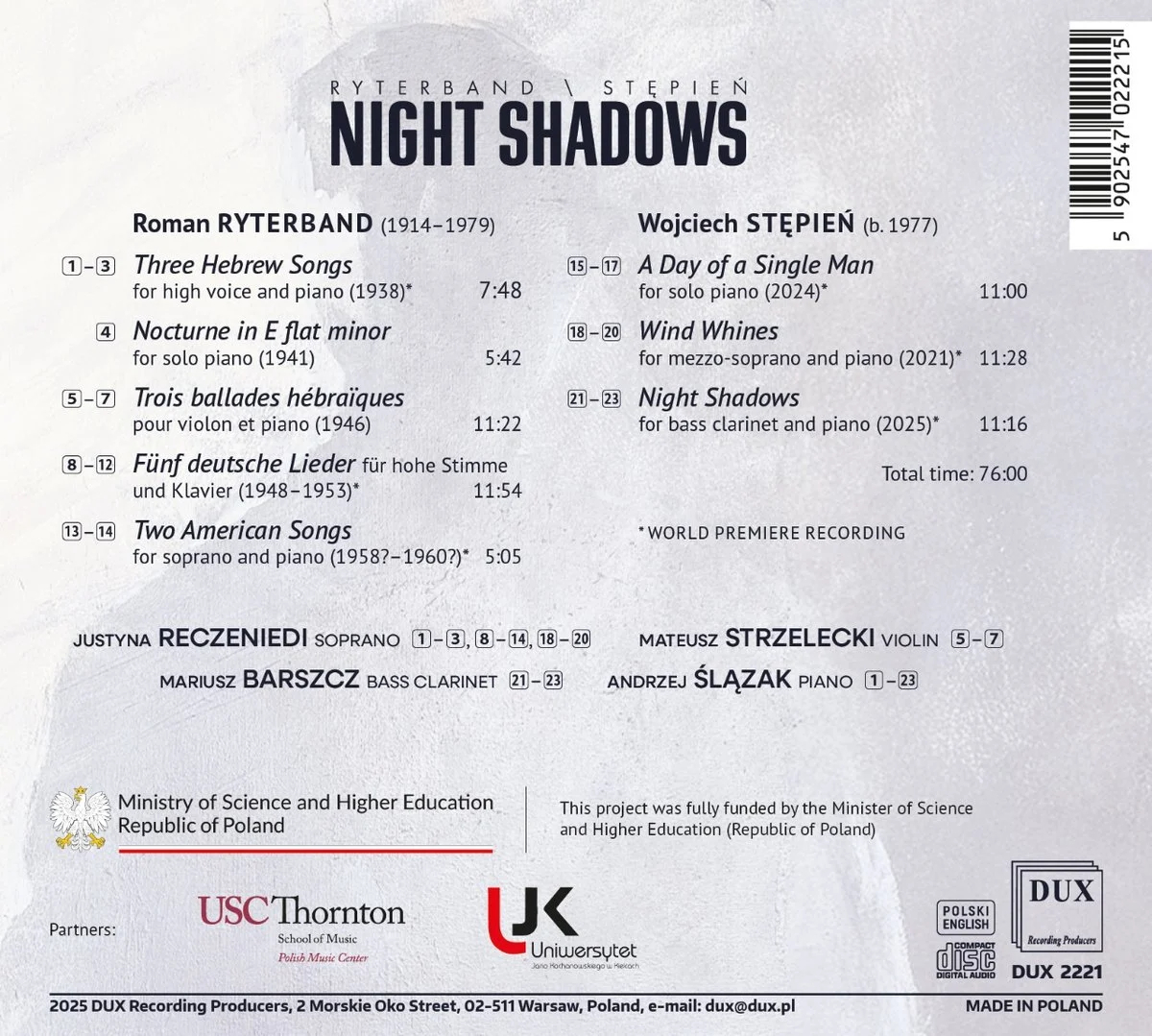
The album comprises chamber compositions and songs by Roman Ryterband, born at the threshold of World War I, and Wojciech Stępień, a contemporary composer – most of the pieces on this album have their world premiere recordings. Ryterband's still little-known work displays a strong influence of traditional Jewish music, both in his songs and violin ballads. The German and American songs come from the later periods of his life and reflect his interest in both the poetry and traditional music of the countries he visited. Stępień's "A Day of a Single Man" is a three-movement suite based on musical material from his chamber opera "A Single Man," as is "Night Shadows," dedicated to clarinetist Mariusz Barszcz. The album's title can be interpreted as, among other things, the shadows of those who have passed away, as significant events recurring in dreams or flashbacks, or as unaccepted feelings and obsessions. This element connects the seemingly distant works of both composers, Ryterband's works set in the style of modernism with elements of folklore and the contemporary, muted compositions of Stępień, sparing in their means of expression.
Na album składają się kompozycje kameralne i pieśni urodzonego u progu I wojny światowej Romana Ryterbanda oraz Wojciecha Stępnia, współczesnego kompozytora – większość utworów ma na tej płycie światową premierę fonograficzną. Wciąż mało poznana twórczość Ryterbanda przejawia silne wpływy tradycyjnej muzyki żydowskiej, zarówno w pieśniach, jak i skrzypcowych balladach. Pieśni niemieckie i amerykańskie pochodzą z późniejszych okresów jego życia i odzwierciedlają zainteresowanie zarówno poezją, jak i tradycyjną muzyką krajów, w których przebywał. "A Day of Single Man" Stępnia to trzyczęściowa suita, oparta na materiale muzycznym z jego kameralnej opery "A Single Man", podobnie jak dedykowane klarneciście Mariuszowi Barszczowi "Night Shadows". Tytuł płyty można interpretować mi.in jako cienie tych, którzy odeszli, jako istotne wydarzenia powracające w snach lub retrospekcjach czy też nieakceptowane uczucia i obsesje. Ten element łączy pozornie daleką twórczość obu kompozytorów, osadzone w stylu modernizmu z elementami folkloru utwory Ryterbanda i współczesne, wyciszone, oszczędne w środkach wyrazu kompozycje Stępnia.












 serpent.pl /
shop /
latest /
special offers /
new /
recommended /
labels /
artists /
bestsellers /
shipping costs /
help /
terms and conditions /
contact
serpent.pl /
shop /
latest /
special offers /
new /
recommended /
labels /
artists /
bestsellers /
shipping costs /
help /
terms and conditions /
contact