Editor's info:
It was September 1972, just after the final notes of Lully's opera Bourgeois Gentilhomme, to a text by Molière, had been recorded by a fairly random assembly of musicians who had got together for the first time to do this – mostly young and enthusiastic advocates of authentic Baroque performance, directed by Gustav Leonhardt, harpsichord maestro and discerning driving force behind this recording. Dr. Alfred Krings, of the German Harmonia Mundi recording label, then asked the inevitable question of what name this previously non-existent ensemble should be given on the record sleeve…
With a delicate, slightly enigmatic smile on his face, Gustav Leonhardt conjured up his suggestion of "LA PETITE BANDE". Leonhardt was a man of somewhat aristocratic demeanour and I instantly felt I recognised a subtle but unmistakeable reference to the slightly "gang-like" aspect of our hitherto unblooded musical get-together, and I was happy about this covert allusion as I felt really at home in this brand new grouping. But a few seconds later (presumably because I was gazing at him in puzzled confusion), he explained to me what his suggestion was all about: La Petite Bande, he said, was the name used sometimes at the court of Louis XIV to describe a smaller and most likely better qualified group of musicians, called upon for auspicious occasions only, in other words a sort of musical elite. I swallowed my views on this apparent contradistinction and immediately said I agreed entirely with the suggestion. Nothing "gang-like" about this group; rather a prestigious, elite Bande de musiciens. Personally, I felt that we were reaching a bit too high, but most of all I was relieved and happy that this problem (of giving the infant a name) had been dealt with.
When I look back now, I'm astonished and grateful that this unusual birth of our "little band" – obviously more the result of happy circumstance than premeditated....... more
Info dystrybutora:
Belgijski dyrygent, skrzypek, altowiolista Sigiswald Kuijken to jedna z najważniejszych postaci świata muzyki dawnej i pokolenia odkrywającego zasady historycznego wykonawstwa. Solista, kameralista, dyrygent, legendarny skrzypek, który w 1981 roku dokonał pionierskiego nagrania Sonat i Partit Jana Sebastiana Bacha jest dzisiaj jednym z ostatnich obok ortodoksów, dla których wciąż najważniejsza jest historyczna prawda i docieranie do intencji kompozytora.
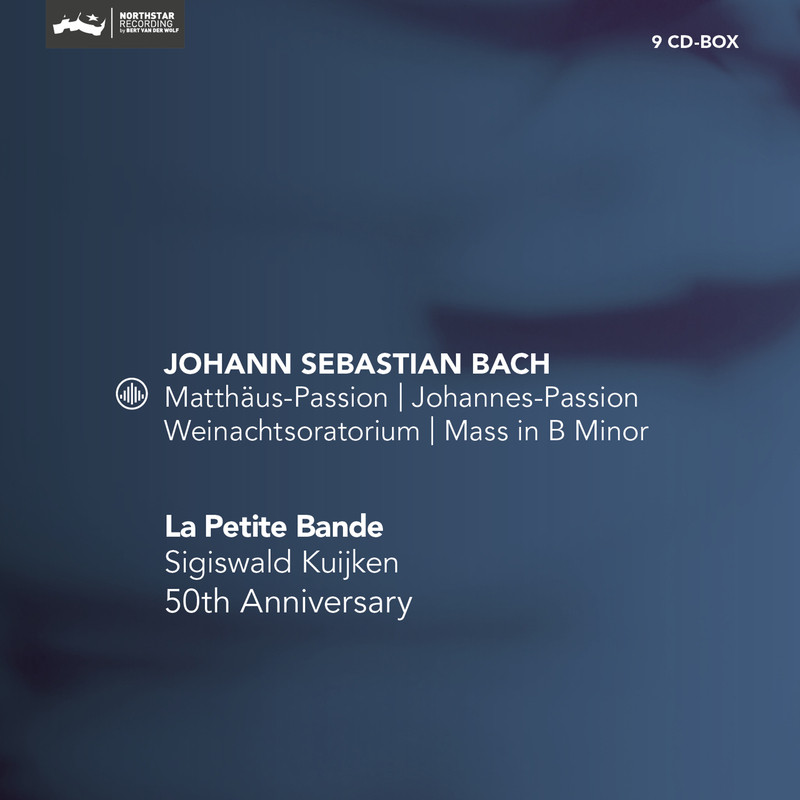
Gdy w 1972 roku, przy wsparciu Gustava Leonhardta zakładał orkiestrę barokową La Petite Bande, nie przypuszczał zapewne, że poprowadzi ją przez następne 50 lat. Teraz możemy się cieszyć jubileuszową kolekcją historycznych nagrań La Petite Bande z bachowskimi oratoriami.
Tak recenzent Czasu Kultury kończy swoją recenzję "Pasji Mateuszowej" w wykonaniu Sigiswalda Kuijkena i jego La Petite Bande - "Nagranie wybitne, w którym ciężko znaleźć słabe strony. Znakomita orkiestra, która doskonale współpracuje z niewielkim chórem, który złożony jest z solistów - a to sprawa niełatwa. Idealnie wyważone proporcje między liryczną introwertycznością a rzadką, ale jakże istotną intensywnością narracyjną. Wszystko tu zostało mądrze, dokładnie przemyślane. Propozycja Sigiswalda Kuijkena na lata może się stać punktem odniesienia dla wykonań podobnych stylistycznie"
Dawno temu dołączył do grona zwolenników solowej obsady partii chóralnej w wykonaniach dzieł religijnych Bacha i w taki sposób – rezygnując z brzmienia chóru – nagrał pomieszczone w jubileuszowym boksie oratoria - "Matthäus-Passion, BWV 244", "Johannes-Passion, BWV 245", "Weihnachtsoratorium, BWV 248" i "Mass in B Minor, BWV 232". "Kim jesteśmy przy Bachu?...” pyta retorycznie i szuka dalej prawdy o muzycznym świecie przeszłości.










 serpent.pl /
shop /
latest /
special offers /
new /
recommended /
labels /
artists /
bestsellers /
shipping costs /
help /
terms and conditions /
contact
serpent.pl /
shop /
latest /
special offers /
new /
recommended /
labels /
artists /
bestsellers /
shipping costs /
help /
terms and conditions /
contact