muzycy:
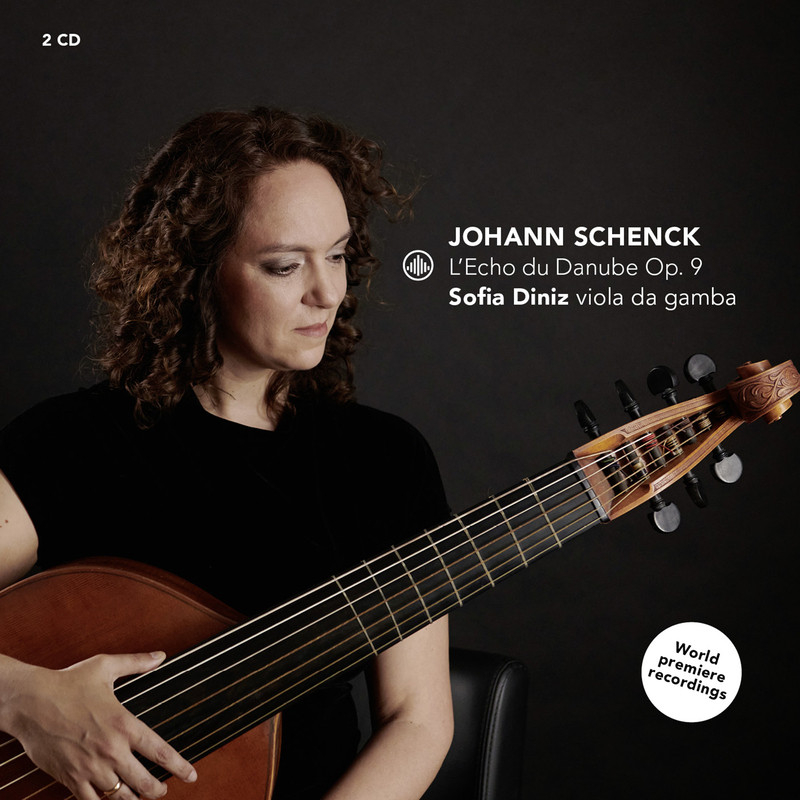
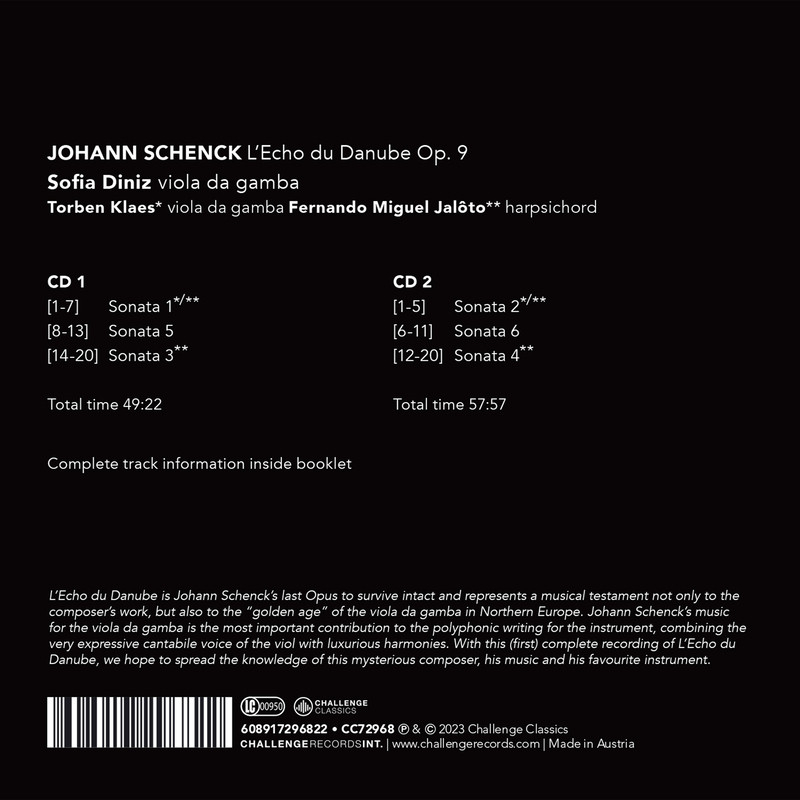
Sofia Diniz - Viola da gamba
Fernando Miguel Jalôto - Harpsichord
Torben Klaes - Viola da gamba
Editor's info:
L’Echo du Danube is the poetic title given by Johann Schenck to his collection of pieces for viola da gamba, first published around 1703/04 as Opus 9 in Amsterdam by Estienne Roger — the most important music printer at the time. L’Echo du Danube is Schenk’s last complete work to survive, a fact that gives these pieces the weight of a “musical testament. It comprises six sonatas for solo viol: the first two sonatas with basso continuo accompaniment, the next two also with basso continuo but this time ad libitum (optional), and the two last ones for viola da gamba without any accompaniment. Although Marin Marais already had published his first book of Pièces de Viole in 1686 and the flourishing English viol tradition was well known in Northern Europe, Schenk’s approach to the instrument is an important step in the process of creating an independent repertoire, specifically written for the viol by composers who were themselves performers and masters of its idiomatic idiosyncrasies. Although Schenck fully explores the potential of the viol as a melodic instrument, he clearly favoured, its possibilities of playing chords, in a manner strongly influenced by lute playing and repertoire: he sought to show the viol as an instrument that is harmonically independent, appropriate for polyphonic writing besides its talent for melodic singing. Hence his writing in such a distinctive way: abundantly using chords and double stops; continually alternating between the bass and the high register; and striving for an effective combination of luxurious harmony and depth of sound, without losing sight of the delicately cantabile voice of the viola.
Gdy mówimy o wirtuozowskiej literaturze na violę da gamba nazwisko niemieckiego gambisty i kompozytora Johannesa Schencka stawiane jest na równi z nazwiskami D. Buxtehude, J. Riehmana, J.S. Bacha czy G.P. Telemanna.
"L’Echo du Danube" to swoisty "muzyczny testament" tego kompozytora. To ostatnie jego zachowane w komplecie dzieło. Melodyjna inwencja Schencka jest już legendarna, obok fragmentów wymagających niebywałej wirtuozerii, znajdują się również takie, które są nadzwyczaj proste. Kompozytor świetnie wykorzystuje specyficzne właściwości instrumentu zarówno w zakresie brzmienia w danych tonacjach, jak i możliwości szybkiego przenoszenia melodii do odległych rejestrów.
Chociaż Marin Marais opublikował już swoją pierwszą książkę "Pièces de Viole" w 1686 roku, a wspaniała tradycja angielskiej literatury na viole da gamba była dobrze znana w Europie Północnej, podejście Schenka do tego instrumentu stanowiło ważny krok w procesie repertuarowej emancypacji violi da gamba. Od tego właśnie czasu pojawiają się specjalnie napisane kompozycje na violę da gamba, których pierwszymi wykonawcami byli właśnie ich kompozytorzy, znający idiomatyczne osobliwości takiego repertuaru. Choć Schenck w pełni wykorzystuje olbrzymi potencjał violi da gamba, jako instrumentu melodycznego, wyraźnie eksponuje jej możliwości w zakresie grania akordów, tak jak ma to miejsce chociażby w przypadku literatury lutniowej. Viola da gamba w dorobku Schencka jest instrumentem harmonicznie niezależnym, dedykowanym instrumentalnej polifonii.
Urodzona w Portugalii Sofia Diniz uczyła się pod okiem mistrzów - Rainera Zipperlinga (wiolonczela barokowa i altówka da gamba) w Holandii, Wielanda Kuijkena i Philippe’a Pierlota (viola da gamba) w Belgii. Współpracuje z kilkoma zespołami i orkiestrami muzyki dawnej, takimi jak The Spirit of Gambo (Freek Bortslap), Il Fondamento (Paul Dombrecht), Ricercar Consort (Philippe Pierlot), Collegium Vocale Gent (Philipp....... more












 serpent.pl /
shop /
latest /
special offers /
new /
recommended /
labels /
artists /
bestsellers /
shipping costs /
help /
terms and conditions /
contact
serpent.pl /
shop /
latest /
special offers /
new /
recommended /
labels /
artists /
bestsellers /
shipping costs /
help /
terms and conditions /
contact