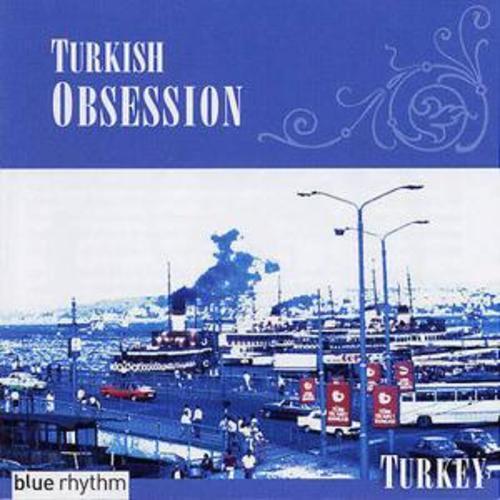
The first modern-day musicians to show an interest in Turkish music and its astonishing wealth of different rhythms were American and African jazzers living in Europe during the 1960s. Their orientation by no means represented the earliest musical contact between West and East, of course, but was a resurgence of something far older. Not even the compositions that Mozart contributed to the history of music (a Turkish 'retranslation' of his "Rondo alla Turca" can be found on this CD) – based as they were on the rhythms of Ottoman military music or 'Janissary music' – were the earliest of their kind. The group Sarband, one of the most fascinating and outstanding ensembles in the search for early contacts between East and West, quite impressively proved years ago that such connections between Turkey and Europe date all the way back to the sixteenth century.
It may be helpful to imagine the early Ottoman Empire and its centre Istanbul (still Constantinople at that time) as a melting-pot of musical cultures, similar to Andalusian Spain during Arab rule. In the Ottoman Empire as well, different cultures encountered one another, introducing their own musical cultures and borrowing mutually. The music of the Balkans, the folk music of the Sinti and Roma and Jewish Klezmer music all contain a wealth of melodies and rhythms dating back to Turkish music (a "Terkisher," for instance, is still part of the typical repertoire of Klezmer bands). The instruments were gradually swapped and interchanged too: The large number of percussion instruments (ranging from the tiny tambourine to the enormous Turkish drum) were in use far beyond the borders of the empire, and a very loud instrument of the shawm family – the so-called Zurna – was known from the Black Sea to the Adriatic. The spectrum of this CD ranges from the calm, flowing, almost silent but still highly artistically ornamented music of the old ....... more
Calm Flow and Rhythmic Turmoil
The first modern-day musicians to show an interest in Turkish music and its astonishing wealth of different rhythms were American and African jazzers living in Europe during the 1960s. Their orientation by no means represented the earliest musical contact between West and East, of course, but was a resurgence of something far older. Not even the compositions that Mozart contributed to the history of music (a Turkish 'retranslation' of his "Rondo alla Turca" can be found on this CD) – based as they were on the rhythms of Ottoman military music or 'Janissary music' – were the earliest of their kind. The group Sarband, one of the most fascinating and outstanding ensembles in the search for early contacts between East and West, quite impressively proved years ago that such connections between Turkey and Europe date all the way back to the sixteenth century.
It may be helpful to imagine the early Ottoman Empire and its centre Istanbul (still Constantinople at that time) as a melting-pot of musical cultures, similar to Andalusian Spain during Arab rule. In the Ottoman Empire as well, different cultures encountered one another, introducing their own musical cultures and borrowing mutually. The music of the Balkans, the folk music of the Sinti and Roma and Jewish Klezmer music all contain a wealth of melodies and rhythms dating back to Turkish music (a "Terkisher," for instance, is still part of the typical repertoire of Klezmer bands). The instruments were gradually swapped and interchanged too: The large number of percussion instruments (ranging from the tiny tambourine to the enormous Turkish drum) were in use far beyond the borders of the empire, and a very loud instrument of the shawm family – the so-called Zurna – was known from the Black Sea to the Adriatic. The spectrum of this CD ranges from the calm, flowing, almost silent but still highly artistically ornamented music of the old ....... more










 serpent.pl /
shop /
latest /
special offers /
new /
recommended /
labels /
artists /
bestsellers /
shipping costs /
help /
terms and conditions /
contact
serpent.pl /
shop /
latest /
special offers /
new /
recommended /
labels /
artists /
bestsellers /
shipping costs /
help /
terms and conditions /
contact