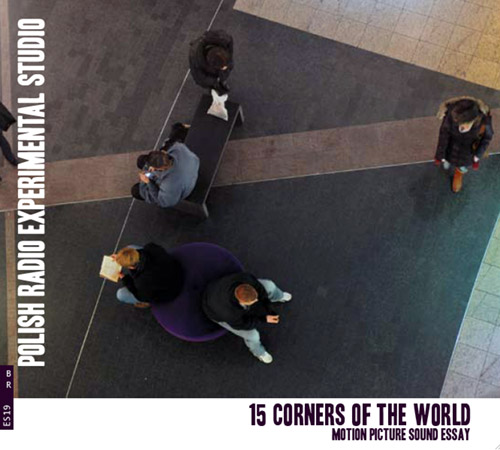
The film 15 Corners of the World includes simul- taneous audio and images. Images do not supple- ment the music here, nor does the music simply illustrate the photos. Meanings, senses, feelings, and scenes are created where those two spheres cross. Without vision, there is no “moving of the viewer’s imagination, the inventory of his feelings, experiences, and associations”, as Eugeniusz Rudnik defines the goal of art in general.
Speaking about vision and sound forces us to find some sort of principle that would allow building comprehensible relations between them. Yet there is no universal principle—there is only the illusion of language that we have created for a single movie. We have built our own means of expression and used them so as to create an emo- tional and intellectual narrative. In that way, we have found images that have blended irrevocably with the music. Therefore, is the sound essay 15 Corners of the World incomplete? How does it relate to the movie?
The essay is open to interpretation. It allows you to close your eyes and trigger your own screening. It is a test of the visual potency of Eugeniusz Rudnik’s works. Have we, the movie’s authors, been the only ones to hear so much vision in it? Find out for yourself.
Zuzanna Solakiewicz
Film 15 stron świata nie istnieje bez równoczesnej projekcji dźwięku i obrazu. Ani zdjęcia nie są tu dopełnieniem muzyki, ani muzyka nie ilustruje zdjęć. Znaczenia, sensy, uczucia i sceny tworzą się na przecięciu tych dwóch sfer. Bez obrazu nie następuje “poruszenie wyobraźni odbiorcy, maga- zynu jego przeżyć, doświadczeń, skojarzeń” – jak Eugeniusz Rudnik ujmuje cel twórczości w ogóle.
Rozmawianie o obrazie i dźwięku wywołuje potrzebę odnalezienia jakichś zasad, które pozwalałyby budować między nimi zrozumiałe relacje. Jednak takich uniwersalnych zasad nie ma. Istnieje tylko iluzja języka, jaką stworzyliśmy na potrzeby jednego filmu. Zbudowaliśmy własne środki wyrazu i operowaliśmy nimi w taki sposób, aby kreowały przebieg emocjonalny i intelek- tualny. W ten sposób znaleźliśmy obrazy, które nierozerwalnie złączyły się z muzyką. Skoro tak, to czy esej dźwiękowy 15 stron świata jest czymś niepełnym? Jak się ma do filmu?
Esej jest otwarty na interpretację. Pozwala na za- mknięcie oczu i uruchomienie własnej projekcji. Jest sprawdzianem z potencji wizualnej utworów Eugeniusza Rudnika. Czy tylko my, twórcy filmu, usłyszeliśmy w niej tyle obrazu? Proszę posłuchać na własną rękę.










 serpent.pl /
shop /
latest /
special offers /
new /
recommended /
labels /
artists /
bestsellers /
shipping costs /
help /
terms and conditions /
contact
serpent.pl /
shop /
latest /
special offers /
new /
recommended /
labels /
artists /
bestsellers /
shipping costs /
help /
terms and conditions /
contact