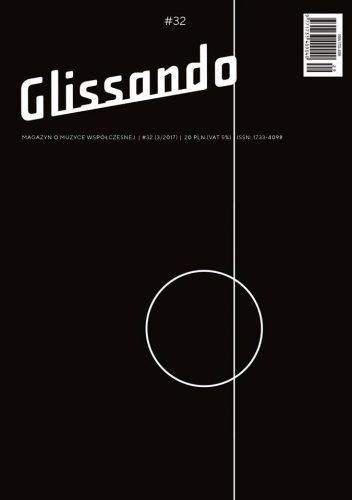
Let us perform a radical reduction of the ways we think about capturing sound. Having traced the methods of capturing sound in Western culture – first on paper (or, in earlier centuries, on papyrus), then on other physical media – one should pay attention to the repeated use of two symbols: the line and the circle. The 32nd issue of Glissando explores the idea that recordings – both visual and physical – are the principal media of music. Paradoxically, this means that sound is not. What is, then, the relationship between the sound and the medium? How do they interact?
It may be a coincidence that the 32nd issue of Glissando is also divided into two parts: the first two sections deal with capturing and recording, while the other two examine musical notation and scores. The opening section presents various approaches to sound and music recording: from the sound-line as part of the scientific language, through recording as remembering (including its cultural and historical contexts), to the visions of the loss of sound recording (and the loss of memory?). This leads us to the section devoted to contemporary „uses” of media. They became a new „instrument” (experiments with magnetic tape, CDs, and anti-media) which influences our thinking about the sound of digital natives (streaming). Using them can be seen as an ideological and aesthetic manifesto. A discussion of contemporary media is complemented by another installment of the „Small is Beautiful” series devoted to independent experimental record labels.
The second part of the issue opens with a section dealing with musical notation. Can we say that the graphic revolution within the realm of musical notation actually contributed to its „liberation”? A musical score takes on new meanings when one draws a parallel between its materiality and the performer’s corporeality. Adopting a performative perspective seems l....... more
Przeprowadźmy radykalną redukcję tego, jak myślimy o zapisie dźwięku. Jeśli prześledzimy sposoby zapisywania dźwięku w kulturze Zachodu – najpierw na papierze (wcześniej papirusie), potem na kolejnych, materialnych nośnikach – zauważymy powtarzalność dwóch symboli, linii i koła (lub okręgu). Podstawowym założeniem #32 poświęconego zapisowi jest stwierdzenie, że zapis (tak wizualny, jak materialny) jest głównym medium muzyki. Zatem, paradoksalnie, niekoniecznie jest nim sam dźwięk. Czym jest w takim razie dzisiaj dla dźwięku zapis i jak wzajemnie na siebie oddziałują?
Być może to przypadek, że budowa „zapisowego” #32 numeru „Glissanda” również jest dwudzielna: pierwsze dwa działy opowiadają o zapisie i rejestracji, dwa następne o notacji i partyturach. Dział otwierający numer wychodzi od różnego rozumienia sposobów dźwiękowego lub muzycznego zapisywania: od dźwięku-linii jako składnika języka nauki, poprzez zapis jako zapamiętywanie, jego kulturowe i historyczne konteksty tkwiące we wszelkich nagraniach, aż po wizje zaniku nagrywania (i pamięci?). Dopełnieniem jest kolejny dział poświęcony współczesnym „użyciom” nośnika lub medium. Stały się one nowym „instrumentem” (eksperymenty z taśmą, płytami CD, antynośnikami), kształtują myślenie o dźwięku cyfrowych tubylców (strumieniowanie), ich użycie może być manifestem estetyczno-światopoglądowym. Stanowiąca część działu kolejna odsłona cyklu „Małe jest piękne” uzupełnia spojrzenie na współczesne nośniki o perspektywę nizależnych, eksperymentujących wytwórni.
Drugą połowę numeru rozpoczyna dział poświęcony notacji. Czy rewolucja graficzna w notacji faktycznie przyniosła jej „uwolnienie”? Partytura nabiera dodatkowych znaczeń, gdy powiążemy jej materialność z cielesnością performującej ją osoby. Perspektywa wykonawcza będzie naturalnym komentarzem do utworów, w których rozszerzony element graficzny wybija się na....... more










 serpent.pl /
shop /
latest /
special offers /
new /
recommended /
labels /
artists /
bestsellers /
shipping costs /
help /
terms and conditions /
contact
serpent.pl /
shop /
latest /
special offers /
new /
recommended /
labels /
artists /
bestsellers /
shipping costs /
help /
terms and conditions /
contact